Ideas
By the end of this week, 4 million more barrels could be shut out of this market if things continue the way they are with production shutdowns. A massive and sudden supply shock in the Middle East, combined with the effective closure of the Strait of Hormuz, will sustain oil prices above $100 per barrel. US-based energy producers and broad energy equities will experience massive margin expansion and free cash flow generation as they sell into a supply-starved global market. LONG. US energy producers are insulated from Middle East physical disruptions but benefit directly from the global price spike. A coordinated G7 Strategic Petroleum Reserve (SPR) release or a sudden diplomatic breakthrough could rapidly collapse the geopolitical premium in oil prices.
Those countries that are most dependent on oil imports, Taiwan, South Korea, they are also the most heavy markets. Tech stocks leading declines, and you are looking at these big names down about 10% or so. Asian manufacturing and semiconductor hubs are highly dependent on imported energy. A sustained spike in crude oil prices acts as a massive tax on these economies, crushing corporate margins and consumer spending. Furthermore, energy-intensive sectors like data centers and chip foundries will face severe operational cost headwinds. SHORT. Export-driven, energy-importing Asian economies and their flagship tech manufacturers will suffer severe margin compression. Central bank interventions, government stabilization funds (like the one mentioned in South Korea), or a rapid drop in energy prices could trigger a sharp short-covering rally.
There is zero chance the Federal Reserve can constitute an interest rate cut in the near term. The way things are going it looks like it will be a jump in inflation. A sustained oil shock creates stagflation (low growth, high inflation). Central banks cannot cut rates to save the economy if inflation is spiking due to energy costs. This "higher for longer" rate environment will cause long-duration Treasury yields to rise and their prices to fall. SHORT. Long-duration government bonds will lose value as inflation expectations are repriced higher and rate cut hopes are abandoned. If the energy shock causes a severe and immediate global deflationary recession, investors may panic-buy long-term Treasuries as a safe haven, driving prices up despite inflation fears.
War in the Middle East is fueling soaring prices for agricultural crops and energy and fertilizer costs increase. Disruptions to crude oil supplies are also boosting the opinion of crop space biofuels, lifting the demand for vegetable oil and corn. High crude prices make biofuels economically viable and highly demanded, diverting agricultural outputs (like corn and vegetable oils) away from food markets and into energy markets. Combined with rising fertilizer costs (tied to energy), the cost of production and the end-market price for agricultural commodities will surge, benefiting agribusinesses and crop funds. LONG. Agricultural commodities and the companies that process them will see increased pricing power and demand due to the biofuel substitution effect. Favorable global weather patterns leading to bumper crop yields could offset the biofuel demand, or a drop in crude oil could destroy the biofuel arbitrage.
You had a certain positive story coming into the year for the German economy and there is a chance that that is basically being torched before our eyes with this war in Iran. The German economy is 20% industry. Germany's industrial base is highly sensitive to energy input costs. Just as the economy was showing signs of recovery (first positive manufacturing PMI since 2022), a new energy shock will halt industrial production, compress margins, and destroy consumer sentiment, pushing the country back toward recession. SHORT. Broad German equities will underperform as the industrial engine stalls due to unaffordable energy inputs. The ECB could aggressively cut rates to stimulate the European economy, or Germany could secure alternative, cheaper energy supplies faster than anticipated.
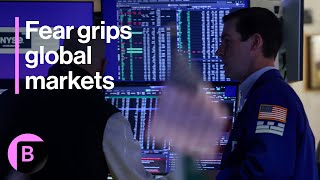
This Bloomberg Markets video, published March 09, 2026,
features Vonnie Quinn, News Reporter, Unidentified Market Analyst, Oliver Crook
discussing CVX, OXY, XLE, EWY, TSM, EWT, TLT, WEAT, CORN, ADM, EWG.
5 trade ideas extracted by AI with direction and confidence scoring.
Speakers:
Vonnie Quinn,
News Reporter,
Unidentified Market Analyst,
Oliver Crook
· Tickers:
CVX,
OXY,
XLE,
EWY,
TSM,
EWT,
TLT,
WEAT,
CORN,
ADM,
EWG