Trump Repeats Call to Fully Open Strait of Hormuz
Speakers
Donald Trump
— President of the United States
Summary
- Trump asserts that negotiations with Iran are actively ongoing, contrary to prior Iranian denials.
- Claims Iran is "begging" to make a deal, indicating a perceived shift in their bargaining position to weakness.
- Cites a specific fact: Iran sent eight ships of oil, then added two more, totaling ten ships, suggesting increased export activity or a negotiation gesture.
- Core demand: Iran must fully open the Strait of Hormuz to allow unimpeded oil transport.
- Primary market implication: Reopening the strait could increase global oil supply capacity, potentially lowering prices or reducing supply-side volatility.
- Geopolitical context: U.S.-Iran relations are a critical factor for oil market stability in the Middle East.
- Key uncertainty: The outcome of negotiations and the timeline for the strait's opening remain unclear, dependent on diplomatic progress.
- Narrow observation: The quantification of oil ships provides concrete, albeit anecdotal, data on current Iranian exports, adding specificity to the narrative.
- Contrarian edge: Trump positions himself as having correctly called the negotiation status, implying insider knowledge or assertive diplomacy that may influence market perceptions.
- Overall tone suggests a push for a deal that would ease oil supply constraints, with implications for energy markets and broader trade flows.
Ideas
Trump explicitly stated that Iran "has to open up the Strait of Hormuz" and mentioned Iran sending ten ships of oil, indicating ongoing negotiations directly affecting oil supply chains. The Strait of Hormuz is a critical global oil transit chokepoint; fully opening it would increase oil transport capacity, reduce supply disruption risks, and likely impact oil prices and market volatility. This geopolitical development is significant for oil markets, warranting close monitoring as successful negotiations could lead to increased supply, lower prices, or a reduced geopolitical risk premium, though no direct trade view was stated. Negotiations could break down, Iran might not comply with opening the strait, or other geopolitical factors could maintain constraints, negating the potential supply boost.
Up Next
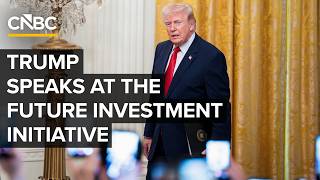


This Bloomberg Markets video, published March 27, 2026, features Donald Trump discussing WTI. 1 trade idea extracted by AI with direction and confidence scoring.
Speakers: Donald Trump · Tickers: WTI