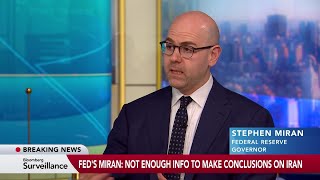
Miran Says Policy Can't Be Made on Short-Term Headlines
Speakers
Steven Miran
— Chair, Council of Economic Advisers
Summary
- Stephen Miran argues the Federal Reserve should not adjust monetary policy based on short-term oil price shocks, emphasizing a policy outlook focused on 12-18 months due to lags.
- Traditional central banking wisdom holds that oil shocks primarily affect headline inflation, not core inflation, so they are typically "looked through" unless second-round effects emerge.
- Current data shows no evidence of second-round effects: medium-term inflation expectations (e.g., five-year, five-year forward) are declining, and wage pressures have been easing steadily for years.
- Miran dissented at the last FOMC meeting, voting for a 25 basis point rate cut, and maintains a dovish stance, expecting gradual cuts—though he reduced his 2024 projection from six to four cuts due to recent inflation data.
- Oil price increases act as a negative demand shock by reducing consumer spending on non-energy goods, potentially raising unemployment and offsetting inflationary pressures.
- The balance of risks from the oil shock is symmetric: both inflation and unemployment risks have increased, with no asymmetric shift that would warrant a policy change.
- Unlike the highly accommodative policy settings in 2021-2022, current monetary and fiscal policy are not boosting demand, making broad-based inflation from supply shocks less likely.
- Miran sees the labor market in a persistent gradual softening trend over three years, and the oil shock could accelerate this trend, supporting the case for rate cuts.
- Key uncertainties include whether the oil shock will bleed into core inflation or trigger a wage-price spiral, but broad-based evidence is lacking so far.
- Communication remains important to anchor inflation expectations, but current expectations beyond the first year remain stable, reducing urgency for a policy response.