How Iran's Weaponry Can Put US Military Under Strain
Speakers
Interviewer
— Host
Defense Analyst
— Analyst
Summary
- The US and its regional partners are burning through high-end air defense interceptors and long-range weaponry at an unsustainable pace.
- The US is attempting to quadruple the production pace of critical munitions, but this capacity will not be fully realized until 2030, leaving a near-term supply gap.
- Iran possesses an asymmetric, low-cost advantage in the Strait of Hormuz by using small boats to deploy naval mines.
- Mining the Strait of Hormuz would effectively cut off commercial shipping, requiring a lengthy and expensive US military de-mining and escort operation to restore transit.
Ideas
"The United States is trying to ramp up its production of some of these most critical munitions, but that's going to take a long time. They're trying to quadruple the pace, but that's not going to happen until 2030." High consumption of advanced air defense interceptors and long-range weaponry creates a severe stockpile deficit. To bridge this gap and supply both US forces and regional allies, the Department of Defense must issue massive, multi-year procurement contracts. Prime defense contractors that manufacture these specific missile systems (like Patriot, THAAD, and Standard Missiles) will benefit from guaranteed, long-term revenue visibility and expanded production facilities funded by the government. LONG prime US defense contractors specializing in missile defense and advanced munitions due to a guaranteed demand supercycle through 2030. Supply chain bottlenecks (such as shortages in solid rocket motors or critical minerals) could delay production timelines and revenue realization.
"Iran has low cost ways of laying mines in the strait... they can use those to further and snarl commercial traffic and make it so that the Strait of Hormuz is off limits." The Strait of Hormuz is the world's most critical chokepoint for global oil transit. If Iran deploys cheap naval mines, commercial oil tankers will refuse to transit due to uninsurable risks, effectively halting millions of barrels of daily oil supply. This asymmetric warfare tactic would trigger an immediate and violent spike in global crude oil prices. US-based energy producers and broad energy equities will capture massive margin expansion while remaining geographically insulated from the physical transit risk. LONG crude oil and US-based energy equities as a direct geopolitical hedge against asymmetric disruptions in the Middle East. The US Navy successfully deters mining operations before they begin, or a diplomatic de-escalation removes the immediate threat premium from oil markets.
Up Next




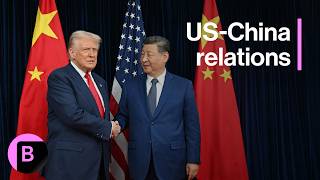
This Bloomberg Markets video, published March 11, 2026, features Defense Analyst discussing NOC, LMT, RTX, USO, CVX, XLE. 2 trade ideas extracted by AI with direction and confidence scoring.
Speakers: Defense Analyst · Tickers: NOC, LMT, RTX, USO, CVX, XLE