What Iran War Ceasefire Means for Stocks, Bonds, Oil | The Pulse 4/8
Speakers
Joumanna Bercetche
— Anchor, Bloomberg
Myles Bradshaw
— JPMorgan Asset Management, Head of Global Aggregate Strategies
Ziad Daoud
— Chief Emerging Market Economist, Bloomberg
Alessia Berardi
— Amundi Investment Institute, Head of Emerging Macro Strategy
Anthony
— Bloomberg Middle East Energy Reporter
Nightingale
— Shipping Industry Expert
Julian Barnes-Dacey
— European Council on Foreign Relations, Middle East and North Africa Programme Director
John Williams
— New York Fed President
Rafaèle Tordjman
— Jeito Capital, Founder and CEO
Summary
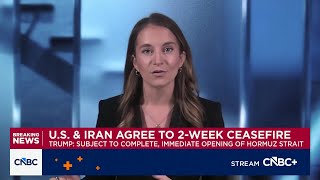
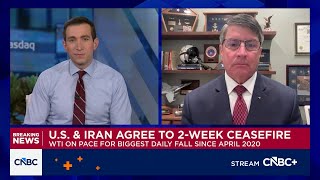
- U.S. and Iran agreed to a two-week ceasefire, temporarily easing geopolitical tensions and causing oil prices (WTI) to fall ~15% and global stocks to rally.
- Strait of Hormuz reopening is conditional: Iran requires coordination with its armed forces and may impose transit fees, creating uncertainty for shipping traffic and oil supply normalization.
- Central banks (ECB, BoE, Fed) may pause or reduce rate hikes as lower oil prices alleviate inflation pressures, though growth concerns persist in a more vulnerable economy compared to 2022.
- Bond markets repriced sharply, with yields falling significantly (e.g., two-year Gilt yield down 24 bps) as risk premia from the conflict receded, highlighting value in bonds.
- Emerging markets benefited from lower oil and a weaker dollar, boosting stocks and currencies, but vulnerabilities vary (e.g., Turkey's thin reserves vs. India's net energy imports).
- Shipping industry remains cautious, awaiting technical guidance on safe passage through Hormuz; insurance costs and safety concerns may delay a return to normal traffic levels.
- Geopolitically, the ceasefire is fragile and precarious; Iran may have gained strategic leverage by asserting control over Hormuz, while the U.S. appears diminished in the eyes of allies.
- Energy infrastructure damage in the Gulf will take months or years to repair, constraining oil supply and keeping prices elevated above pre-war levels despite the ceasefire.
- Fed's John Williams indicated monetary policy is well-positioned, expecting inflation around 2.75% and growth slowing to 2-2.5% due to higher fuel costs from the conflict.
- Private equity in biotech shows resilience; Jeito Capital raised $1.2B for clinical-stage companies in Europe, targeting pharma demand for new drugs despite geopolitical noise.
- Obesity drug market is a major opportunity, with estimates reaching $150B by 2032, and innovation beyond current GLP-1 drugs (e.g., side effect avoidance) is emerging.
- Disagreement exists on the ceasefire's sustainability: Israel says it doesn't include Lebanon, and ongoing hostilities (e.g., explosions at Iran's refinery) could quickly unravel the deal.
Ideas
Speaker explicitly stated, "I think there is still value there in the bond market." The ceasefire lowers oil prices, reducing inflation risks and allowing central banks (ECB, BoE) to pause or scale back rate hikes, which supports bond prices. LONG because bonds are undervalued given reduced expectations for aggressive central bank tightening. Ceasefire collapses, oil prices surge again, forcing central banks to prioritize inflation control and hike rates.
Up Next

This Bloomberg Markets video, published April 08, 2026, features Myles Bradshaw discussing TLT. 1 trade idea extracted by AI with direction and confidence scoring.
Speakers: Myles Bradshaw · Tickers: TLT