Ideas
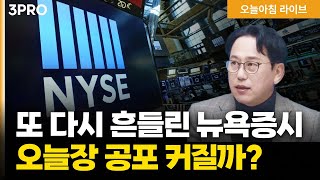
Buy Korean equities; dips are opportunities.
Park argues the Korean market is in an unusually strong phase and sharp one-day drops should not be treated as exits unless caused by interest-rate shocks; with around KRW 111tn in waiting deposits and heavy retail buying, he advises holding stocks, keeping 20-30% cash, and adding on weakness rather than selling into panic.
Samsung and Korean semis remain leadership buys.
Morgan Stanley raised its Samsung Electronics target and called it the biggest money-making tech company, with 2026 operating-profit estimates around KRW 230tn; Park sees more upside even after a 10% jump and says semiconductor leadership remains intact, so investors should accumulate on weakness.
Watch autos for tariff relief upside.
Autos lagged the semiconductor-led rally, but Park says the sector remains a core leading industry; if Trump tariff risk is resolved, Korean automakers could jump another 10%, so he treats the tariff period as an accumulation window.
Korean securities and Mirae still have upside.
Park has repeatedly favored securities brokers as KOSPI rises, ETF products multiply, and exchanges extend trading hours toward 24-hour trading; Mirae Asset Securities has added momentum from SpaceX-related exposure, and he thinks the group can keep rising.
Buy holding companies with strong subsidiary earnings.
He favors holding companies whose subsidiaries are reporting strong earnings, naming SK, HD, Hanwha, CJ, and LS as examples; the value-up and self-share cancellation debate can keep them rotating.
KOSDAQ 150 inclusion may attract ETF flows.
He notes that KOSDAQ 150 inclusion can attract ETF flows, and traders may rotate into laggard constituents; investors should check whether their stock is in the index because that flow can drive short-term moves.
Small-cap semi equipment offers relative strength.
He points out small and mid-cap semiconductor equipment names in the Russell 2000 held up better than megacap semis; with capex still high and front-end profitability visible, he wants to concentrate on equipment suppliers that can fund investment.
Buy storage hardware on AI demand.
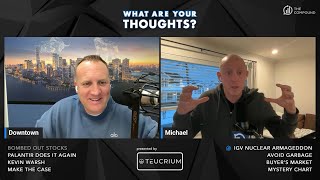
Kim says storage hardware was a rare strong area during the tech selloff: SanDisk, Seagate, and Western Digital held up because AI workloads create durable demand for memory and storage, and he prefers these names over weaker large-cap tech.
Avoid legacy software until AI risk clears.
Anthropic's Claude Cowork and other AI agents are beginning to perform core legal, marketing, and data-analysis workflows, threatening SaaS subscription models; Kim says buying software dips is dangerous until revenue and operating-margin trends prove AI is not eroding the business.
Prefer power infrastructure and nuclear over oil.
Kim says capital is moving into energy, but he prefers power infrastructure and nuclear over oil because data-center power bottlenecks persist and nuclear-fuel mineral prices are rising; he would increase interest in power infrastructure and nuclear names.
Accumulate Samsung and SK hynix on dips.
Kim remains positive on Samsung Electronics and SK hynix: they have far larger memory and storage market share than Western peers, downside should be limited, sharp rebounds are common, and he recommends a 4:4:2 mix of Samsung, SK hynix, and cash or substrate while accumulating on negative candles.
Buy small KOSDAQ chip suppliers with growth.
His second priority within Korean semiconductor materials and equipment is small-cap KOSDAQ suppliers that grew 2025 earnings versus 2024 but have not yet rallied; KOSDAQ activation policy and index fund flows could favor them.
Accumulate Hyundai and Kia with robot optionality.
Kim says autos and robots should be accumulated below the 500,000-won level; Hyundai Motor and Kia may need a period of consolidation, but robot valuation optionality and holding through volatility are favored.
Prefer robot reducer suppliers over robot platforms.
He prefers robot reducer specialists over expensive robot platform names because they are a narrower component play with clearer industrial value as robot production scales.
Rainbow Robotics valuation is hard to justify.
Rainbow Robotics has risen far beyond what its operating profit supports, and Kim finds it difficult to justify holding if it falls; he would only trade it tactically rather than invest.
Battery sector can rise on ESS catalysts.
Kim sees potential for additional upside in secondary batteries if upcoming ESS and storage earnings and Ecopro group results are not bad, and if higher oil prices improve the renewable-energy narrative.
Buy solid-state battery material suppliers.
In solid-state batteries, Kim highlights ISU Specialty Chemical and Lake Materials as the compressed way to play the theme.
Buy Ecopro and POSCO Future M materials.
For battery materials, Kim compresses the idea to Ecopro, Ecopro BM, and POSCO Future M.
Hanjung NCS is a clean ESS play.
Kim singles out Hanjung NCS because about 90% of its revenue comes from ESS, far above the under-20% ESS exposure of LG Energy Solution and other battery makers, giving it cleaner leverage to ESS growth.
Shipping may rally on Iran risk.
If Iran-related geopolitical risk flares, Kim expects short-term strength in shipping names; he notes Daehan Shipping's position and accumulated supply and demand and also mentions Heung-A Shipping.
SK hynix, SK Square value-up catalyst.
Third Point's Daniel Loeb disclosed stakes in SK hynix and SK Square and is pressing for US ADR listing, buybacks, and value enhancement; Lee argues SK Square is the strongest direct beneficiary because 90% of its assets are SK hynix shares, SK hynix itself should gain from ADR access and multiple expansion toward Micron, and SK Inc should benefit from self-share cancellation expectations under the commercial law amendment.
Energy and S-Oil may rebound.
Lee says the Iran drone shootdown revived geopolitical risk and oil volatility; energy-related stocks such as S-Oil that sold off sharply can rebound again as traders rotate back into energy.
Korean construction machinery gains from US housing.
The Trump Homes proposal for one million starter homes may create a huge US construction and equipment market; Korean machinery names with high US exposure, including Doosan Bobcat, HD Construction Equipment, and Jinsung T.E.C., could benefit, though he advises waiting for a pullback after the sharp jump.
Novo Nordisk faces patent and competition pressure.
Novo Nordisk warned of falling 2026 sales and operating profit because of GLP-1 patent expirations, US drug-price pressure, and Eli Lilly's share gains; Lee notes the stock fell 14%, and the risk profile remains challenged despite oral obesity-drug launches.
Eli Lilly took US obesity share.
Lee notes Eli Lilly's tirzepatide, Zepbound, and Mounjaro have overtaken Novo Nordisk in US obesity-market share, a competitive win that supports Lilly's position.
Buy obesity reformulation pipelines in Korea.
With GLP-1 patents expiring, obesity-drug value shifts to reformulation, long-acting injections, and oral pills; Lee highlights Korean players with such pipelines, including D&D Pharmatech, G2G Bio, and Peptron.
Gold and copper strength lifts Korean beneficiaries.
Min says gold has rebounded toward $5,000 and copper and other commodities are strong after the margin-hike shock; Korean beneficiaries such as Korea Zinc, Poongsan, and LS could see positive read-through.
Industrial and energy rotation may reach Korea.
Min observes money rotating from technology into industrial cyclicals and energy in the US; he expects a similar rotation could support industrial and energy sectors in Korea.
Generac gains from data-center power demand.
Generac hit a new high because its data-center engine and generator sales are improving, driving upward earnings revisions; Min treats it as a data-center power infrastructure winner.
Buy Korean nuclear; BHI is preferred.
Nuclear was Korea's strongest premarket theme; Min prefers BHI because it already broke its prior high while Doosan Enerbility has not, and he cites Korea-US nuclear cooperation and the broader nuclear value chain including KEPCO and Woojin.
Prefer Mirae Securities over Mirae Venture.
Min prefers Mirae Asset Securities over Mirae Asset Venture Investment: trading volume has surged to around KRW 60tn, which flows into brokerage earnings, while Mirae Asset Venture Investment's SpaceX exposure is smaller than expected and its stock is volatile.
Prefer Mirae Securities over Mirae Venture.
Min prefers Mirae Asset Securities over Mirae Asset Venture Investment: trading volume has surged to around KRW 60tn, which flows into brokerage earnings, while Mirae Asset Venture Investment's SpaceX exposure is smaller than expected and its stock is volatile.
Kiwoom Securities benefits from retail volume.
Korean trading value has surged, and Kiwoom Securities has the highest retail brokerage exposure, so Min expects its earnings to benefit as long as the market does not break.
Medipost rises on cartilage clinical progress.
Medipost is making new highs as US and Japanese cartilage-regeneration clinical trials progress; Min says holders can continue but must manage risk if the upper-limit breakout price fails.
Rare-earth magnet supply risk creates opportunity.
Trump's focus on securing rare-earth supply and China supply risk increase the strategic value of rare-earth magnets; Min highlights JS Link, which has shifted into neodymium magnets and has a JV with POSCO International, plus SenoTeX and NovaTech.
Hyundai E&C benefits from nuclear construction.
Hyundai E&C received positive broker comment as nuclear construction starts accelerate; Min sees it as a nuclear-construction beneficiary.
Solid-state battery ETF supported into event.
Min says the solid-state battery ETF is near a new high and the InterBattery event on March 11-13 should keep the sector's atmosphere positive until the event.
Fadu rebounds on SSD expectations.
Fadu resumed trading and rallied on expectations that SSD demand remains strong; Min treats it as a trading rebound rather than a fundamentals-based long.
This 815 Money Talk (815머니톡) video, published February 04, 2026,
features Park Hyun-sang, Kim Tae-seong, Lee Ju-hyeon, Min Jae-gi
discussing EWY, KOSDAQ, 005930.KS, Korean semiconductor sector, Korean automakers, 006800.KS, Korean securities sector, 034730.KS, 267250.KS, 000880.KS, 001040.KS, 006260.KS, KOSDAQ 150, US semiconductor equipment small/mid caps, SNDK, STX, WDC, Software/SaaS sector, ADBE, NOW, GRID, URA, 000660.KS, 005380.KS, 000270.KS, Robot reducer suppliers, 108490.KQ, Korean secondary battery sector, 457190.KS, 281740.KQ, 086520.KQ, 247540.KQ, 003670.KS, 107640.KQ, 005880.KS, 003280.KS, 402340.KS, 010950.KS, XLE, 241560.KS, 267270.KS, 036890.KQ, NVO, LLY, 347850.KQ, 456160.KQ, 087010.KQ, GLD, COPPER, 010130.KS, 103140.KS, XLI, GNRC, 083650.KQ, 034020.KS, 015760.KS, Woojin, 100790.KQ, 039490.KS, 078160.KQ, 127120.KQ, SenoTeX, NovaTech, 000720.KS, Solid-state battery ETF, 440110.KQ.
38 trade ideas extracted by AI with direction and confidence scoring.
Speakers:
Park Hyun-sang,
Kim Tae-seong,
Lee Ju-hyeon,
Min Jae-gi
· Tickers:
EWY,
KOSDAQ,
005930.KS,
Korean semiconductor sector,
Korean automakers,
006800.KS,
Korean securities sector,
034730.KS,
267250.KS,
000880.KS,
001040.KS,
006260.KS,
KOSDAQ 150,
US semiconductor equipment small/mid caps,
SNDK,
STX,
WDC,
Software/SaaS sector,
ADBE,
NOW,
GRID,
URA,
000660.KS,
005380.KS,
000270.KS,
Robot reducer suppliers,
108490.KQ,
Korean secondary battery sector,
457190.KS,
281740.KQ,
086520.KQ,
247540.KQ,
003670.KS,
107640.KQ,
005880.KS,
003280.KS,
402340.KS,
010950.KS,
XLE,
241560.KS,
267270.KS,
036890.KQ,
NVO,
LLY,
347850.KQ,
456160.KQ,
087010.KQ,
GLD,
COPPER,
010130.KS,
103140.KS,
XLI,
GNRC,
083650.KQ,
034020.KS,
015760.KS,
Woojin,
100790.KQ,
039490.KS,
078160.KQ,
127120.KQ,
SenoTeX,
NovaTech,
000720.KS,
Solid-state battery ETF,
440110.KQ