Trump Signals Possible End to Iran War; Oil slides | Horizons Middle East & Africa 3/10/2026
Speakers
Joumanna Bercetche
— Anchor, Bloomberg
Winnie Hsu
— Bloomberg Reporter (Asia Markets)
Unidentified CoinDesk speaker
— Unidentified CoinDesk speaker; Bitcoin mining / AI data center commentator
Unidentified Speaker 2
— Executive Editor for Middle East and Africa
Stephen
— Reporter
Unidentified Speaker 3
— Professor of Iran Politics
Summary
- Oil prices experienced unprecedented volatility, plummeting from $120 to $90 per barrel after President Trump signaled the US-Iran war would resolve very soon and promised to suspend oil-related sanctions.
- Despite the oil price drop, geopolitical risks remain structurally high as Iran appointed the hardline son of the assassinated Ayatollah as its new Supreme Leader, signaling continued defiance.
- Asian equities experienced a relief rally, driven by South Korean memory chip makers and Chinese tech, specifically Tencent following a major AI product release.
- The macroeconomic shock of volatile oil is creating a sharp divergence in emerging markets, severely punishing net oil importers (South Africa, Kenya) with inflation and rate hikes, while providing a GDP windfall to exporters (Nigeria, Angola).
- Saudi Aramco reported a full-year 2025 adjusted net profit beat of 392.5 billion riyals and announced a $3 billion share buyback, though future output remains uncertain due to full storage facilities.
Ideas
What we are seeing is gold which would have been a hedge has seen some profit-taking initially, but it does seem that the demand in the near term and beyond the next few weeks should be more positive, and we are looking at hedges across those portfolios. The market is aggressively pricing in a quick end to the war based on Trump's rhetoric, leading to a temporary risk-on relief rally and profit-taking in safe havens. However, the structural reality of Iran's new hardline leadership and ongoing proxy attacks means the geopolitical risk premium is underpriced. Investors will structurally require gold to hedge against the inevitable secondary flare-ups. LONG because the recent profit-taking offers a strong entry point for a macro hedge in a fundamentally unstable geopolitical environment. A comprehensive, binding peace treaty is signed that completely normalizes relations in the Middle East, destroying the safe-haven premium.
Defense positioning has been part of market flow, so it really trying to limit that to the overall stock market moves. Even if a short-term ceasefire is reached, the fundamental security doctrine of the Middle East has been shattered. Gulf nations, Israel, and Western allies will structurally increase their baseline defense spending and restock depleted missile defense systems, providing a long-term pipeline of contracted revenue for major US defense primes. LONG because defense hardware demand has shifted from cyclical to structural due to the permanent escalation of regional hostilities. US government budget cuts or a shift toward isolationist policies that restrict foreign military sales.
Samsung Electronics both actually up double digits earlier today and lots of optimism still in the stocks after valuations dropped about 25% since the January height, while the overall outlook for demand and memories to looks quite intact. South Korea is highly dependent on Middle Eastern oil imports. The sudden drop in oil prices removes a massive macroeconomic overhang and input cost pressure for the country. With the macro pressure relieved, the underlying fundamental strength of memory chip demand can drive a sustained recovery in Samsung's heavily discounted shares. LONG because the fundamental demand for memory chips remains strong while the primary macroeconomic headwind (energy costs) is subsiding. If the Middle East conflict re-escalates and oil spikes back above $120, South Korean equities will face renewed macro pressure regardless of chip demand.
The share really is in the tech sector with Tencent up about 6% leading gains. That's coming after the company released a new AI agent that is fully compatible with China's open hold... Citigroup in fact calling it potentially an inflection point for AI agents in China. Chinese tech giants are successfully moving from AI development to commercial deployment. A functional, widely compatible AI agent provides Tencent with a massive new monetization engine that is entirely insulated from Middle Eastern geopolitical volatility and Western trade sanctions. LONG because Tencent is reaching a commercial inflection point in AI that the market is just beginning to price in. Regulatory crackdowns by the PBOC or Chinese government on AI deployment, or broader weakness in the Chinese domestic consumer economy.
There is a minority of countries that benefit from the higher oil prices that includes Nigeria and Angola. Angola would benefit by as much as 3% of GDP. While the broader African continent suffers from imported inflation due to high energy costs, oil-exporting nations receive a massive influx of foreign capital. This windfall improves their sovereign balance sheets, stabilizes their local currencies, and provides a macro tailwind for domestic equities. LONG because Nigerian equities offer a direct, localized play on elevated average oil prices with improving sovereign fundamentals. A total collapse in global oil prices, or domestic political instability/corruption preventing the oil windfall from benefiting the broader economy.
We expect to start to see inflation start taking up... countries who have to pass on the higher prices to consumers will see inflation pickup and the early risers in terms of rate hikes will probably need the net oil importers. South Africa is a net oil importer with a vulnerable currency. Sustained high energy costs force the central bank to hike interest rates to combat imported inflation, which chokes off domestic economic growth and compresses equity multiples. SHORT because South African equities face a toxic macroeconomic combination of slowing growth, rising inflation, and higher interest rates. A rapid and sustained drop in global oil prices back to pre-conflict levels, which would relieve inflationary pressure and allow the central bank to pivot back to easing.
Up Next
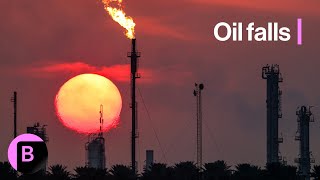
This Bloomberg Markets video, published March 10, 2026, features Winnie Hsu discussing GLD, LMT, RTX, ITA, 005930.KS, TCEHY, NGE, EZA. 6 trade ideas extracted by AI with direction and confidence scoring.
Speakers: Winnie Hsu · Tickers: GLD, LMT, RTX, ITA, 005930.KS, TCEHY, NGE, EZA