Oil Surges as Saudi Pipeline Shutdown Brings Fresh Supply Risk

Watch on YouTube ↗  |  September 14, 2026 at 19:38  |  5:45  |  Bloomberg Markets
Speakers
Rob Barnett — Bloomberg Analyst
Paul — Host

Summary

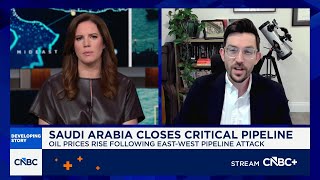
Oil markets are under severe strain after Saudi Arabia shut a major crude pipeline and the Strait of Hormuz remains closed, disrupting exports from a key global supplier. Rob Barnett says crude and refined product prices are likely to stay tight until Middle East flows improve, with diesel and gasoline prices already elevated. He also expects a slow multi-year reordering of global energy supply toward pipelines, non-Gulf sources, and electrification, while noting Russia supply disruptions add to near-term tightness.

  • Saudi pipeline shutdown and Strait of Hormuz closure disrupt oil exports.
  • Crude market described as tight, with diesel above $6 and gasoline above $4.
  • Short-term oil demand is inelastic; no major demand destruction yet.
  • Russian refinery disruptions add another layer of supply risk.
  • Longer-term energy diversification may favor pipelines, non-Gulf supply, and electrification.
  • China EV adoption is rising as part of its energy strategy.
  • No obvious exit ramp from the geopolitical supply disruption.
Ideas
Rob Barnett Bloomberg Analyst 0:08
Supply shocks keep oil and fuels tight.
The oil market is extremely tight because Saudi Arabia's pipeline shutdown and the closure of the Strait of Hormuz are blocking a key export route for an anchor supplier that is producing only 6.3 million barrels a day. US diesel above $6 per gallon and gasoline above $4 per gallon show the product tightness, demand remains inelastic with little demand destruction, and Russian supply disruptions add another bullish pressure. Prices should stay elevated until flows out of the Middle East improve.
Rob Barnett Bloomberg Analyst 1:17
Energy diversification favors pipelines and electrification.
The Middle East supply disruption will force a multi-year reordering of the global energy landscape toward more pipelines, more supplies outside the Gulf, and electrification. This is capital-intensive and slow, but the trend favors energy infrastructure diversification and electrification as buyers seek to reduce reliance on the region.
Rob Barnett Bloomberg Analyst 1:57
China EV adoption rises on energy strategy.
China is seeing big increases in EV adoption as part of its strategy to electrify and reduce reliance on oil and gas. Although this is a slow-moving shift, it supports the China EV theme as a long-term beneficiary of energy-security diversification.
Up Next

This Bloomberg Markets video, published September 14, 2026, features Rob Barnett discussing WTI, UGA, HO=F, AMLP, Electrification, China EV. 3 trade ideas extracted by AI with direction and confidence scoring.

Speakers: Rob Barnett  · Tickers: WTI, UGA, HO=F, AMLP, Electrification, China EV