Ideas
Allocate to gold as portfolio diversifier.
Gold is a core diversifier in a fully diversified portfolio because policy uncertainty, Fed-independence concerns and elevated geopolitical risk are pushing investors toward precious metals; Eastspring itself wants to allocate to gold.
China new energy exports remain resilient.
China's export sector remains resilient because of cost advantages and leadership in new-energy sectors such as EVs, batteries and solar panels, which continued to grow strongly; resilience should extend into 2026 even with tariff and Iran-related risks.
China is investable again, not just beta.
China's equity market has outperformed and the 'not investable' narrative has faded, with action in AI and solar and supportive investor flows; it is not a simple beta play but a differentiated portfolio holding, though property and policy-support risks remain.
Buy Japan on corporate earnings rebound.
Japan remains an exceptional story driven by corporate earnings and renewed corporate investment; despite fiscal, political and currency noise, corporate Japan's earnings and capex are the key support.
Japan mid/small caps offer domestic value.
Within Japan, large caps are more exposed to the yen, while mid- and small-caps offer better value and more direct exposure to a positive domestic economy; Eastspring fund managers prefer those spaces.
India offers domestic growth and diversification.
India is a domestic-demand story rather than an AI trade; with early rate hikes, low inflation, room for central-bank stimulus and persistent domestic flows, it should be a portfolio diversifier that outperforms when U.S. tech weakens.
Rare earths are China's export lever.
China has found rare-earth metals and export controls to be a powerful lever and is determined to expand and modernize these capabilities, so trading partners should prepare for a broader, more sophisticated Chinese export-control regime.
CJ
Asian Equities Editor, Bloomberg
43:09
India small/mid-caps show faster earnings growth.
Fund managers are turning bullish on Indian small- and mid-caps after long underperformance because these companies are expected to grow 10-15% versus about 7% for larger peers, valuations have softened from peaks, and they are more domestically oriented and less exposed to Trump tariffs; earnings growth could bring foreign investors back into this space first.
Short JGBs as Japanese yields rise.
Japanese government bonds are likely to keep selling off: the weak five-year auction, fiscal concerns around Takaichi's spending plans and a BOJ sidelined by politics point to significantly higher Japanese yields, with the long end especially vulnerable.
Long USD/JPY as yen weakness continues.
Yen weakness has no clear floor as traders bet on continuation; fiscal and political uncertainty plus BOJ caution support a higher USD/JPY, though intervention risk if the pace accelerates means options and hedges are preferred and upside is expected to be gradual.
Australian gold M&A backdrop is supportive.
Australia is seeing inbound M&A and domestic consolidation, particularly in gold, where the sector backdrop is supportive of further consolidation.
Asia data centers need 3.5x capacity.
The AI boom requires roughly 3.5 times current data-center capacity, so capital will keep flowing into Asia-Pacific data centers and digital infrastructure; hyperscalers need capacity in Southeast Asia, China, Japan, Australia, India and Korea, and sponsor-owned suppliers will need capital or seek monetization.
JSW Steel execution drives India expansion.
JSW Steel is JFE's partner because of its exceptional execution capability and high investment implementation rate, completing expansions in three to four years that others take four to five; combined with JFE's high-value-added steel experience, this should make the venture India's number one steel manufacturer.
India steel demand will overtake China.
India's steel growth rate is around 8%, its 1.4 billion population and government target of 300 million tons by 2030 offer huge potential, and long term India should overtake China as the world's largest steel producer; JFE is therefore investing $1.7 billion in an Indian joint venture.
China steel faces structural overcapacity.
China's steel sector faces a structural surplus-capacity problem now that iron demand has peaked; exports of around 100 million tons are nearly impossible to absorb globally, making the surplus a major challenge for China and a competitive risk for other producers.
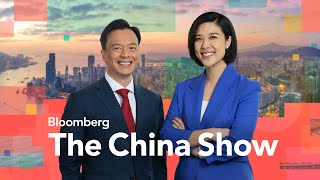
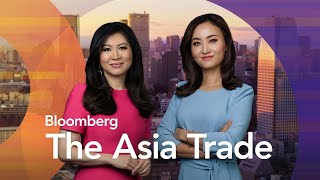
This Bloomberg Markets video, published January 14, 2026,
features Vis Nayar, David Qu, William Klein, CJ, Garfield Reynolds, Rohit Chatterji, JFE Steel EVP
discussing GLD, KGRN, FXI, EWJ, SCJ, India Equities, REMX, Japanese government bonds, USD/JPY, Australian gold miners, Asia-Pacific data centers, JSWSTEEL.NS, India steel industry, China steel sector.
15 trade ideas extracted by AI with direction and confidence scoring.
Speakers:
Vis Nayar,
David Qu,
William Klein,
CJ,
Garfield Reynolds,
Rohit Chatterji,
JFE Steel EVP
· Tickers:
GLD,
KGRN,
FXI,
EWJ,
SCJ,
India Equities,
REMX,
Japanese government bonds,
USD/JPY,
Australian gold miners,
Asia-Pacific data centers,
JSWSTEEL.NS,
India steel industry,
China steel sector