Federal Reserve Chair Jerome Powell speaks after Fed holds interest rate steady — 3/18/2026
Speakers
Jerome Powell
— Federal Reserve Chair
Summary
- Fed holds benchmark interest rate steady at 3.5%-3.75%, with median SEP projection of 3.4% by end-2026, indicating a bias to cut but with high uncertainty.
- Inflation remains elevated at 2.8% headline PCE and 3.0% core PCE, driven largely by goods sector inflation from tariffs, expected to subside as one-time tariff effects pass through, likely mid-year.
- Oil price shocks from Middle East conflict pose upside risks to inflation and downside risks to consumption via higher energy costs, but effects are highly uncertain in size and duration.
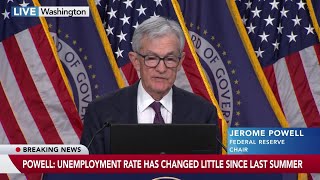
- Labor market shows stability with unemployment rate at 4.4%, but job growth is near zero due to sharply low labor force growth from immigration policy changes, creating downside risk.
- Monetary policy is characterized as mildly restrictive or at the high end of neutral, balancing upside inflation risks and downside employment risks, with no preset course for future moves.
- Tariffs are viewed as one-time price increases, not persistent inflation, but timing of full pass-through to lower goods inflation is uncertain and slower than expected.
- Longer-term productivity gains, potentially from AI, could raise neutral rates and growth, but near-term effects may be inflationary due to data center construction demand.
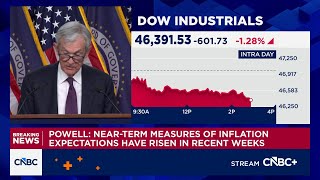
- Inflation expectations are anchored in the long term consistent with 2%, but short-term measures have risen due to oil prices, requiring careful monitoring.
- Stagflation concerns are dismissed; current tension between goals involves modest inflation overshoot and near-normal unemployment, not 1970s-style high misery index.
- Fed independence is emphasized as critical for pursuing price stability without political interference, supported by Congress.
- Public perception of affordability issues persists despite three years of real wage growth, affecting consumer psychology and underscoring commitment to restore 2% inflation.
- Uncertainty dominates the outlook, particularly regarding Middle East developments, with Fed decisions to be data-dependent and meeting-by-meeting.