Powell Says Fed Rates Are Borderline Restrictive
Speakers
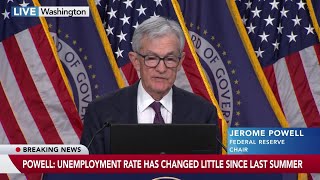
Jerome Powell
— Federal Reserve Chair
Summary
- Current Fed policy interest rate is characterized as at the "high end of neutral" or "mildly restrictive," on the borderline between restrictive and not restrictive.
- A significant portion of the disinflation the Fed is seeking is expected to come from the "runoff" of past tariff impositions, which raised prices on a one-time basis.
- The process of tariffs working through the system to lower goods inflation is estimated to take 8 to 12 months, referencing tariffs implemented in the middle to later part of the prior year.
- Goods inflation, running at about 2%, is currently attributed to this tariff runoff rather than standard Phillips curve dynamics from restrictive monetary policy.
- The Fed feels it is important to keep policy "mildly restrictive" or close to it to manage inflation, but "not too restrictive" due to downside risks in the labor market.
- The Fed views itself in a "difficult situation," balancing dual risks: downside risks to the labor market (calling for lower rates) and upside risks to inflation (calling for higher rates or no cuts).
- The current policy stance is framed as an attempt to balance these two opposing risks, with the borderline restrictive level seen as the appropriate place for now.