Stocks Lower as Commodities and Tech Weigh on S&P; Gold, Silver Dip | The Close 1/30/2026

Watch on YouTube ↗  |  January 30, 2026 at 23:39  |  1:34:46  |  Bloomberg Markets
Speakers
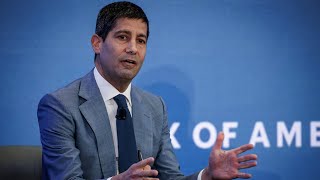
Steven Miran — Chair, Council of Economic Advisers
Brian Niccol — CEO, Starbucks
Darrin Peller — Managing Director, Wolfe Research
Bryan Whalen — CIO & Generalist Portfolio Manager, Fixed Income, TCW Group
Eric Sheridan — Goldman Sachs
Paul Krugman — Nobel Laureate / Professor, CUNY Graduate Center
Peter Conti-Brown — Associate Professor of Business Ethics, Wharton School, University of Pennsylvania
Torsten Slok — Partner, Apollo Global Management
Paul Romer — Nobel laureate, Former Chief Economist, World Bank; Professor, Boston College
Brad Sherman — U.S. Representative, D-CA
Carol Massar — Anchor, Bloomberg

Summary

The episode centered on President Trump's nomination of Kevin Warsh as the next Federal Reserve chair and the cross-asset reaction. Markets fell on the day, the dollar rallied, the Treasury curve steepened, and gold and silver saw historic drops. Guests debated Fed independence, the path of interest rates, and the outlook for tech earnings, Starbucks' turnaround, American Express, and corporate credit.

  • Kevin Warsh nominated as next Fed chair; Senate confirmation uncertainty remains.
  • Stocks closed lower, but major U.S. indices still posted January gains.
  • Dollar rallied while gold and silver suffered historic one-day declines.
  • Treasury curve steepened as markets assessed Warsh's balance-sheet views.
  • Fed Governor Miran argued rates are still too restrictive and more cuts are needed.
  • Starbucks CEO Niccol discussed the U.S. turnaround and China expansion.
  • TCW's Whalen favored front-end duration and patience in corporate credit.
  • Tech analysts discussed AI cloud and advertising winners ahead of Amazon and Alphabet earnings.
Ideas
Steven Miran Chair, Council of Economic Advisers 4:21
Fed should keep cutting, front-end yields lower.
The federal funds rate is too restrictive and the Fed should continue cutting substantially, though at a slower quarter-point-per-meeting pace. He remains concerned about labor-market slack even as unemployment stabilizes, and argues the inflation overshoot is largely due to measurement quirks, so front-end rates should move lower.
Brian Niccol CEO, Starbucks 28:32
Starbucks turnaround improving experience and loyalty.
Starbucks had moved too far from what made the brand special in the U.S., and Niccol is refocusing on the coffeehouse experience, barista-customer connection, product quality, store revamps, menu/marketing/digital, and competitive pricing as an affordable luxury. Customer experience scores are high and hourly turnover is below 50% versus 125% industry, supporting the turnaround.
Darrin Peller Managing Director, Wolfe Research 36:45
Amex rewards costs will pay off.
American Express's Platinum card refresh and rewards promotions are driving a bigger-than-expected near-term hit to cardmember services costs, but spend and revenue should catch up and outweigh costs by late 2026/early 2027. The customer base is shifting younger and more affluent, with Millennials/Gen Z a large and growing share of spending and acquisitions, which should help Amex navigate a bifurcated consumer.
Bryan Whalen CIO & Generalist Portfolio Manager, Fixed Income, TCW Group 41:18
Steepener: long front-end duration, long-end pressure.
Kevin Warsh's nomination is likely to keep the Treasury curve steeper because he is less willing to use the Fed's balance sheet/QE, which markets read as hawkish for the long end, while supporting lower front-end rates. Whalen agrees inflation is yesterday's battle, expects the Fed to cut more aggressively by May, and prefers duration at the short end; long-end pressure could be mitigated by Treasury buybacks, swaps, or front-end issuance.
Bryan Whalen CIO & Generalist Portfolio Manager, Fixed Income, TCW Group 46:23
Wait for better corporate bond entry.
For long-term buy-and-hold investors, quality corporate bonds are acceptable because yields are attractive, but the extra spread compensation is historically tight. Active investors should be patient and wait for market volatility to create a better entry point in corporate credit.
Eric Sheridan Goldman Sachs 91:22
AWS re-acceleration supports Amazon growth.
AI is disrupting the roughly $300 billion advertising profit pool by shifting toward automated ad creation. Only companies with enough data and compute scale can build it, so a handful of players, specifically Alphabet, Amazon, and Meta, should capture outsize profit gains; 'a few take most.'
Up Next

This Bloomberg Markets video, published January 30, 2026, features Steven Miran, Brian Niccol, Darrin Peller, Bryan Whalen, Eric Sheridan discussing Short-term U.S. Treasuries, SBUX, AXP, US Treasury Curve Steepener, LQD, AMZN, GOOG, META. 6 trade ideas extracted by AI with direction and confidence scoring.

Speakers: Steven Miran, Brian Niccol, Darrin Peller, Bryan Whalen, Eric Sheridan  · Tickers: Short-term U.S. Treasuries, SBUX, AXP, US Treasury Curve Steepener, LQD, AMZN, GOOG, META