Israel’s Strategic Objectives Amid Ongoing Conflict in the Middle East
Speakers
Guest Speaker
— Former US Ambassador to Israel / Former Deputy Secretary of State
Anchor
— News Anchor
Summary
- Conflict Expansion: The conflict has fundamentally shifted from a proxy war (Israel vs. Hamas/Hezbollah) to a direct regional conflict. Iran has made a "strategic decision" to directly attack Gulf Arab states, specifically Saudi Arabia, Kuwait, Qatar, and the UAE.
- New Coalition Dynamics: The Guest argues Iran's attack on Arab neighbors is a "massive mistake" that will galvanize a unified anti-Iran coalition involving Israel and the Gulf states ("The enemy of your enemy is your friend").
- US Administration Context: The transcript implies a 2026 timeline under a Trump Presidency (references to "President Trump," "Secretary Rubio," and the Ukraine war entering its 4th year).
- Safety Crisis: There is a significant deterioration in security for Gulf nations, with reports of drones flying over capitals and Americans stuck in Qatar/UAE/Bahrain, creating a "frightening" environment previously unknown to these specific populations.
Ideas
Iran has attacked "Saudi Arabia, Kuwait, Qatar, The UAE." These four nations represent a significant percentage of global oil and LNG production. Unlike previous proxy skirmishes, direct attacks on sovereign Gulf soil threaten production infrastructure and shipping lanes (Strait of Hormuz). LONG. The geopolitical risk premium for energy must re-rate higher immediately. Any physical disruption to infrastructure in these specific countries would send prices parabolic. Demand destruction from a global recession or OPEC+ increasing supply to offset disruptions.
The speaker notes Iran has "made a strategic decision to attack... Saudi Arabia, Kuwait, Qatar, The UAE." Later, he mentions the need for "supplies" and "airspace" defense. This is a massive escalation requiring immediate air defense and missile interception capabilities. Saudi Arabia and the UAE are major clients of US defense primes. The specific mention of "drones flying over your head" directly benefits Raytheon (RTX - Patriot/Counter-UAS) and Lockheed Martin (LMT - THAAD/Aircraft). LONG. The expansion of the kinetic theater to wealthy Gulf nations guarantees increased defense spending and replenishment of interceptors. A sudden diplomatic de-escalation or US refusal to export specific technologies.
"Qatar, UAE, Bahrain, have all been hit really hard... drones are flying over your head... it is scary." The investment thesis for the Gulf (tourism, finance hubs, logistics) relies on stability. If Dubai and Doha are now active war zones with drones overhead, foreign capital will flee, tourism will halt, and expatriate workers (a huge portion of their population) may evacuate. SHORT. These single-country ETFs (UAE, Qatar, Saudi Arabia) will suffer from capital flight and economic paralysis during active bombardment. Government intervention/sovereign wealth funds buying domestic equities to prop up markets.
The war is expanding into Lebanon (Hezbollah) and the Gulf simultaneously. The speaker notes, "It's a huge risk... huge area of friction." Gold is the standard hedge against geopolitical chaos. With the conflict widening from a localized Gaza operation to a multi-front regional war involving major oil producers, the "fear trade" will bid up non-sovereign stores of value. LONG. Classic flight to safety amidst expanding kinetic warfare. A strong US Dollar (DXY) often creates headwinds for Gold, even during conflict.
Up Next


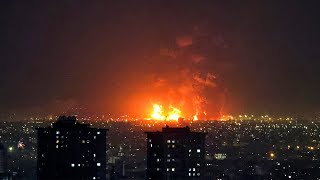


This Bloomberg Markets video, published March 08, 2026, discussing USO, XLE, NOC, LMT, RTX, UAE, KSA, GLD. 4 trade ideas extracted by AI with direction and confidence scoring.