Amid Prolonged Conflict Energy Markets Face Uncertainty
Speakers
Daniel Yergin
— S&P Global Vice Chairman
Summary
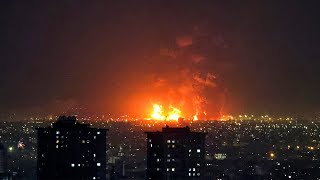
- Global Energy Shock: Oil prices have spiked 36% in a week to over $90/barrel due to a conflict involving Iran. Approximately 20% of global oil and 20% of LNG supply is currently "bottled up" or lost.
- The "Nightmare Scenario": While not there yet, the risk is a prolonged conflict destroying infrastructure, sending the global economy into recession. The key variable is the duration of the war.
- Strait of Hormuz Bottleneck: Shipping is disrupted; insurance costs have hit "war rates." Naval escorts are discussed but risky due to drones and speedboats.
- Resilience Factors: Unlike the 1970s, the US is the world's largest producer. Significant production also comes from Canada and Brazil (4M barrels/day each), providing non-Middle East alternatives.
- Strategic Reserves: Expectation that the US and IEA countries (and China) will release Strategic Petroleum Reserves (SPR) to dampen volatility, similar to the 1991 Gulf War.
Ideas
Yergin discusses the Strait of Hormuz being "bottled up," insurance hitting "war rates," and tankers being "diverted to Asia." "Diverted" is the key word for shipping investors. When ships cannot use the shortest route (Hormuz/Red Sea) and must divert (likely around Africa), the "ton-mile" demand increases drastically. Ships are tied up longer for the same delivery, effectively shrinking the global fleet supply and driving freight rates sky-high. LONG tanker companies (Frontline, Scorpio) to capitalize on surging freight rates and war risk premiums. If the US Navy successfully secures the Strait quickly, rates will collapse back to normal levels.
Yergin states, "You have lost 20% of world oil... clearly all the pressure [is] to pay the price to go up." He notes prices are already above $90. A sudden removal of 20% of global supply creates a massive imbalance. While the SPR might be released, the structural deficit caused by a closed Strait of Hormuz forces spot prices higher to ration demand. USO tracks the commodity directly; XLE captures the producers benefiting from wider margins. LONG oil exposure to capture the immediate scarcity premium. A rapid ceasefire or a massive coordinated release of SPRs (which Yergin notes caused prices to drop in 1991) could reverse the trend.
Yergin notes, "You've lost 20% of LNG... We see tankers that were going to carry LNG to Europe now being diverted to Asia." The conflict has disrupted the global gas trade more severely than oil in some respects. Diverting cargoes to Asia implies a bidding war for available molecules. US exporters (like Cheniere - LNG) are geographically insulated from the Strait of Hormuz and stand to capture the arbitrage spread as Europe and Asia scramble for replacement supply. LONG US natural gas exporters and the commodity itself. Demand destruction due to high prices or a warm winter in the Northern Hemisphere.
Yergin highlights resilience outside the Middle East: "Canada [is at] 4 million barrels a day. Brazil is 4 million barrels a day... So there are alternatives." In a Middle East crisis, capital flees the conflict zone and seeks "safe barrels." Brazil (Petrobras - PBR) and Canada (Suncor - SU) offer oil production exposure that is physically removed from the Iranian conflict zone, making their supply more reliable and valuable relative to Gulf producers. LONG non-OPEC, Western Hemisphere producers as a geopolitical hedge. Global recession triggered by high energy prices could lower overall oil demand, hurting all producers regardless of location.
Up Next


This Bloomberg Markets video, published March 08, 2026, features Daniel Yergin discussing STNG, FRO, USO, XLE, UNG, LNG, SU, PBR. 4 trade ideas extracted by AI with direction and confidence scoring.
Speakers: Daniel Yergin · Tickers: STNG, FRO, USO, XLE, UNG, LNG, SU, PBR