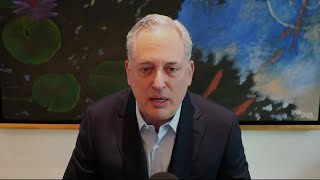
Brent crude rising to $130 or $140 'is not impossible,' says Solus' Dan Greenhaus
Speakers
Dan Greenhaus
— Chief Strategist, ICAP
Summary
- Dan Greenhaus analyzes the Iran situation, viewing market actions as consistent with either negotiating posturing or preparation for escalation, with a specific tactical concern about Kharg Island.
- He states trading around such exogenous geopolitical events is "almost impossible" and sometimes the best action is to do nothing.
- He believes the market is "a little complacent" regarding the downside risks in the Middle East.
- His core oil thesis: If something goes wrong, "Brent, at 130 or 140 is not impossible."
- He provides supporting data: ~15 million barrels per day are still missing from the market due to Hormuz disruptions, as only 4-5 million are being rerouted. The longer this persists, the more risk premium gets mathematically built into prices.
- He acknowledges a generational bias among investors, built on recent crises (Ebola, debt ceiling, COVID) where markets were higher a few months later, fostering optimism.
- He contrasts this with the 2022 bear market, which occurred in a different environment (Fed raising rates), implying the current setup has unique risks.
- He outlines a non-linear risk path: the situation can be okay for a while but could jump to a "different state" (global recession) if disruptions persist without a solution.
- On private credit and BDCs: He notes problems and that a recent note is getting attention, but he is in the camp that this does not represent a systemic risk.
- The overall market implication is one of high uncertainty, with oil prices having significant asymmetric upside risk due to geopolitical supply shocks, against a backdrop of investor complacency.