Ideas
Blue Owl (OWL) is highlighted as a specific concern within the Private Credit space, described as potentially the "canary in the coal mine." The firm grew via aggressive acquisitions. In a tighter credit or regulatory environment, firms that prioritized rapid scaling over disciplined risk culture (underwriting standards) are most vulnerable to "cockroaches" in their portfolio. AVOID or SHORT Blue Owl (OWL) as a proxy for Private Credit excess. Private credit proves more resilient than public markets anticipate; OWL's specific deal structure protects them better than peers.
The DOJ is investigating Netflix's offer for Warner Bros, and Trump explicitly called for Netflix to fire board member Susan Rice or "pay the consequences." This represents heightened political and regulatory risk. The administration is signaling it will look beyond standard antitrust reviews to target companies perceived as political adversaries. WATCH/AVOID Netflix (NFLX) until regulatory clarity emerges. The deal is approved anyway, or the political rhetoric turns out to be bluster.
Netflix's bid for Warner Bros is facing intense scrutiny and potential blocking. If the Netflix deal fails due to regulatory/political pressure, Paramount's (PARA) rival bid for Warner Bros becomes the leading alternative. LONG Paramount (PARA) as an arbitrage play on the Netflix deal failure. Warner Bros decides to stay independent or finds a third suitor; Paramount's own financials deteriorate.
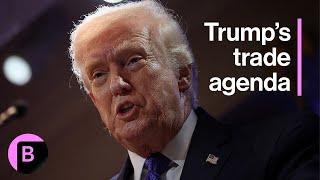
Trump's new policy is a flat 15% global tariff. Previous country-specific or higher retaliatory tariffs are effectively nullified or capped at this new baseline for 150 days. This is a relative game. Countries that previously faced threats of 60%+ tariffs (China) or high specific duties (India/Brazil) now face the same 15% rate as everyone else. This levels the playing field against allies (like the UK/Australia) who previously enjoyed ~0-10% rates. Indian chemical companies specifically benefit from this leveled baseline. LONG India (INDA), China (MCHI), and Brazil (EWZ) as relative winners of the tariff restructuring. Trump may find alternative legal avenues (Section 232 or 301) to re-impose higher specific tariffs after the 150-day period.
The new 15% global tariff applies to everyone, including allies who previously had lower rates (e.g., UK and Australia were at ~10% or lower). These economies are net losers in the new regime. They face a direct tax hike on exports to the US (a 50% increase in the rate for some), losing their competitive advantage over non-allied nations. SHORT UK (EWU) and Australia (EWA) equities/currencies due to sudden trade headwinds. Potential for specific exemptions to be negotiated before implementation (though Trump administration signals "no one has said the deal is off").
Ven Ram
Markets Live Reporter/Strategist, Bloomberg
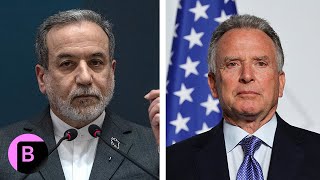
Gold is up nearly 1% on trade uncertainty and the threat of a US military strike on Iran. Gold is benefiting from a dual tailwind: 1) Haven demand due to Middle East war risk, and 2) A weakening US Dollar caused by the Supreme Court limiting Trump's economic leverage. Momentum is strong (up 6% in 4 sessions). LONG Gold as a hedge against geopolitical escalation and dollar debasement. A sudden diplomatic breakthrough in Geneva talks or a de-escalation in rhetoric.
Ven Ram
Markets Live Reporter/Strategist, Bloomberg
The US trade deficit has ballooned to 1960s levels despite tariffs, while the Eurozone current account surplus widened significantly in December. The Supreme Court ruling signals that Trump's ability to unilaterally weaponize the dollar/trade policy is limited. Combined with fundamental flow data (money flowing into EU via surplus), the structural backdrop favors the Euro over the Dollar. LONG Euro (FXE) / SHORT US Dollar (UUP). ECB dovishness or a resurgence of EU-specific political instability.
EU Carbon prices dipped to €69/ton amid volatility regarding new reforms, but the structural target remains to cut emissions significantly by 2035. The "cheaper abatement options" in the power sector are exhausted. Future emissions cuts must come from harder-to-abate industrial sectors, which structurally requires a higher carbon price (projected €185/ton by 2035). The current dip is a policy-driven volatility event in a structural bull market. LONG EU Carbon Credits (via KRBN or futures) on the dip. EU politicians softening targets significantly to protect industrial competitiveness.
This Bloomberg Markets video, published February 23, 2026,
features Rosalind Mathieson, Lizzy Burden, Laura Davison, Ven Ram, Emma Coker
discussing OWL, NFLX, PSKY, MCHI, INDA, EWZ, EWU, EWA, GLD, FXE, KRBN.
8 trade ideas extracted by AI with direction and confidence scoring.
Speakers:
Rosalind Mathieson,
Lizzy Burden,
Laura Davison,
Ven Ram,
Emma Coker
· Tickers:
OWL,
NFLX,
PSKY,
MCHI,
INDA,
EWZ,
EWU,
EWA,
GLD,
FXE,
KRBN