Ideas
Pipeline outage keeps oil upside risks alive.
Saudi Arabia shut the East-West pipeline after drone attacks, removing a key alternative to the Strait of Hormuz. Saudi exports were already at 3 million bpd, the lowest since 2017, and postponed Iran-GCC talks leave no diplomatic relief. This should keep upward pressure on Brent crude and energy prices.
US LNG exports gain non-traditional demand.
US LNG producers should aggressively export to non-traditional South Asian markets such as Pakistan and India where demand is ready and prices are good. He also argues Pakistan should link supplies to Henry Hub rather than Brent-linked Qatari contracts because Henry Hub is under $4, US liquefaction charges are transparent, and only transportation is a negative; long-term US supply would be ideal.
US LNG exports gain non-traditional demand.
US LNG producers should aggressively export to non-traditional South Asian markets such as Pakistan and India where demand is ready and prices are good. He also argues Pakistan should link supplies to Henry Hub rather than Brent-linked Qatari contracts because Henry Hub is under $4, US liquefaction charges are transparent, and only transportation is a negative; long-term US supply would be ideal.
High prices destroy long-term LNG demand.
LNG suppliers are overcharging and profiteering while import-dependent buyers cannot afford cargoes near $27/MMBtu. High prices are causing demand destruction as countries switch to coal, solar, and wind, so LNG is no longer viable for many emerging markets and producers may be destroying their own long-term demand.
Hyperscaler concentration is a real risk.
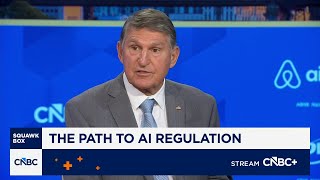
The real AI risks are systemic rather than existential. In markets, there is already a huge concentration risk in and around the hyperscalers, which is a tangible risk today.
China AI closes gap with US.
Chinese AI models have narrowed the performance gap to around 5%, versus 10-15% over the previous 18 months. China has good developers, talent, government support, and a long-term plan; if US firms pull back, Chinese companies will likely double down, making the US-China AI race neck-and-neck over the next 5-10 years.
Rising US supply pressures crude prices.
Although prices are elevated, US oil production has been increasing year on year and will increase again next year. The US will use all tools to step into the supply breach and keep prices down, preventing the $150 scenario, which should pressure crude prices.
Nuclear and SMR demand is rising.
Asia's energy demand is rising rapidly and nuclear is an obvious solution. The US is sharing gigawatt-scale and small modular reactor technology, has brought new reactor designs to criticality, and expects American SMR technology to be globally dominant because its varied designs can fill different niches.
Renewables promise overstated without dispatchable backup.
The promise of renewables is overstated because they require dispatchable generation to meet peak demand and the all-in cost includes transmission plus backup generators. The price benefit is therefore not always as large as assumed.
Grid buildout bottleneck creates infrastructure demand.
Global electricity demand is unprecedented, with gigawatt-scale loads arriving in months instead of years, so the key bottleneck is building enough transmission and generation infrastructure. The US is reconductoring transmission, restarting nuclear plants, and upgrading generation to meet the load.
AI slowdown hurts Asian chip visibility.
The call by US AI leaders to slow frontier development is forcing a repricing of AI capex. That dissipates visibility for 2027-2028 earnings of Asian chip makers and semiconductor supply-chain names, which had benefited from the competitive capex cycle.
Kioxia needs high memory prices.
Kioxia needs very high memory prices to maintain its current share price, so it is particularly vulnerable as AI capex visibility weakens and the market questions the memory upcycle.
SoftBank is long-duration OpenAI bet.
SoftBank is an extremely long-duration play on OpenAI. Any extension of OpenAI's IPO timing would be very needle-moving, and the AI slowdown repricing is already causing weakness in the shares.
Z.AI capital raise shows China strength.
The Chinese AI ecosystem continues to raise money and push the open-weight frontier. Z.AI completed a placement and convertible bond and is still trading above its placement price, while Oracle cancelled its raise, highlighting a capital-markets bifurcation that favors China AI.
US tech ignores macro geopolitical risks.
Positioning in US tech has become too one-sided ahead of the Fed and continued Iran conflict. Dispersion has fallen sharply, single-stock hedging is reduced, and correlation is near zero, implying only AI drives tech while macro and geopolitical risks are ignored—an unsound setup.
This Bloomberg Markets video, published September 14, 2026,
features Abeer Abu Omar, Iqbal Z. Ahmed, Robert Lee, James Danly, Anthony Stevens
discussing BNO, US LNG exporters, Henry Hub Natural Gas, LNG, SKYY, China AI, WTI, Small modular reactors, URA, ICLN, Electric grid infrastructure, Asian chip stocks, Asian semiconductor supply chain, 285A.T, SFTBY, Z.AI, US Tech.
15 trade ideas extracted by AI with direction and confidence scoring.
Speakers:
Abeer Abu Omar,
Iqbal Z. Ahmed,
Robert Lee,
James Danly,
Anthony Stevens
· Tickers:
BNO,
US LNG exporters,
Henry Hub Natural Gas,
LNG,
SKYY,
China AI,
WTI,
Small modular reactors,
URA,
ICLN,
Electric grid infrastructure,
Asian chip stocks,
Asian semiconductor supply chain,
285A.T,
SFTBY,
Z.AI,
US Tech