The Iran War upends stocks: Headline fatigue and the 'Trump Put'
Speakers
Scott Wapner
— Host, CNBC
Stephanie Link
— Chief Investment Strategist, Hightower
Jim Lebenthal
— Partner, Cetera Investment Management
Kevin Simpson
— Investment Committee Member
Rob Sit
— Investment Committee Member
Summary
- Geopolitical tension from the Iran War has driven market volatility, with the S&P and Nasdaq on track for a fifth consecutive negative week.
- Oil prices are elevated (WTI at ~$98), creating a significant commodity supply shock and amplifying inflation concerns.
- Federal Reserve expectations have shifted hawkish, with a 50% chance of a rate hike this year, pressuring yields and market sentiment.
- Sector rotation is evident: Russell 1000 Value is flat YTD while Growth is down 12%, with Energy outperforming but Materials down 9% since the conflict began.
- The "Trump Put" — market reliance on presidential interventions — may be losing efficacy due to headline fatigue and geopolitical flip-flopping, per Barclays analysis.
- Investment committee members are divided: Stephanie Link sees opportunities in value/energy sectors and views the sell-off as short-lived, while others like Rob Sit and Kevin Simpson advocate for caution, waiting, or moving to neutral.
- S&P 500 earnings estimates have risen 2% since the war, projecting 16% YOY growth, partly driven by energy and AI, but margin risks from higher input costs persist.
- AI-driven productivity gains are cited as a partial offset to rising costs, though not a complete solution to inflation pressures.
- Traditional 60/40 portfolios have suffered their worst month since 2022, highlighting a lack of safe havens, with U.S. equity outflows of $23.6B over 13 weeks.
- The fog of war and unpredictable headlines make market timing difficult, leading to a consensus on maintaining dry powder and being ready for opportunistic buying.
Ideas
Stephanie Link explicitly stated that her team is overweight the energy sector and finds the names in this space attractive. Energy sectors have performed well year-to-date and have held up relatively better due to starting from lower valuation bases, even amid market turmoil. Therefore, a LONG position in the energy sector is supported as it offers resilience and attractive investment opportunities during the current geopolitical uncertainty. A de-escalation in the Iran War or a sharp drop in oil prices could negatively impact energy stocks.
Up Next
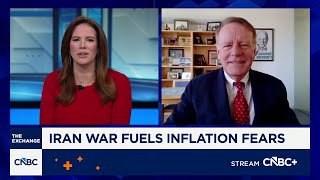




This CNBC video, published March 27, 2026, features Stephanie Link discussing XLE. 1 trade idea extracted by AI with direction and confidence scoring.
Speakers: Stephanie Link · Tickers: XLE