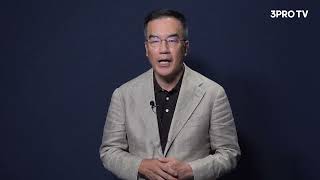
When the exchange rate falls, what stocks are expected? | Executive Director Park Se-ik & Dr. So Hyeon-cheol & Chesley Head of Learning [Byeoljubujeon / 26.08.08.Sat]

[Highlight] When the exchange rate falls, what stocks are expected? | Executive Director Park Se-ik & Dr. So Hyeon-cheol & Chesley Head of Learning [Byeoljubujeon / 26.08.08.Sat]
Watch on YouTube ↗  |  August 09, 2026 at 09:24  |  22:11  |  Chesley Investment Advisory (체슬리투자자문)
Speakers
So Hyeon-cheol — Adjunct Professor, Sangji University

Summary

Dr. So Hyeon-cheol analyzes the recent US-Japan currency coordination, arguing it caps dollar-yen upside and will push the yen to 145-150. He extends the logic to the Korean won, expecting a strengthening to 1,300-1,350 range driven by Bank of Korea's hawkish rate moves and narrowing rate differentials. He then identifies Korean utilities, food & beverage, and steel sectors as the main beneficiaries of a stronger won due to lower import costs, while briefly mentioning airlines and financials.

  • Explanation of the historical and current US-Japan currency coordination (a 'reverse Plaza Accord') to protect both economies from a yen collapse.
  • Japan's inability to raise rates forces it to use US Treasury holdings as collateral for dollar interventions, keeping USDJPY below 160.
  • The speaker targets USDJPY to move to 145-150, implying yen strengthening.
  • The Bank of Korea's July rate hike and hawkish surprise narrowed the US-Korea rate gap, turning the won stronger; the speaker expects USDKRW below 1,400 towards 1,300-1,350.
  • Sectors that benefit from a stronger won: utilities (power) via lower fuel import costs, food & beverage via lower raw material costs, and steel via cheaper iron ore and coking coal imports plus anti-dumping protection.
  • Airlines and financials were mentioned as potential plays but without a detailed thesis.
  • The host reflects on the quality of the analysis, calling it a potential future reference point.
Ideas
So Hyeon-cheol Adjunct Professor, Sangji University 4:07
Yen strengthening to 145-150 on US-Japan coordination.
The yen will strengthen to the 145-150 band against the dollar because the US and Japan have effectively coordinated to cap dollar-yen upside. Japan cannot raise interest rates to defend the yen (government debt at 230% of GDP), so it is using its $1.4 trillion of US Treasury holdings as collateral to obtain dollars and intervene. The US, fearing that a further yen slide would force Japan to sell Treasuries and spike US long-end yields (e.g., 30yr to 5.5-5.6%), decided to backstop the yen. The coordination amounts to a reverse Plaza Accord and a political decision to prevent mutual destruction.
So Hyeon-cheol Adjunct Professor, Sangji University 5:06
Won strengthening to 1300-1350 per dollar.
The Korean won will strengthen below 1,400 per dollar, likely to the 1,300-1,350 range. The Bank of Korea surprised markets by raising rates in July and signaling further hikes (possibly another 25bp), narrowing the interest-rate gap with the US. Despite heavy foreign selling, the won did not break 1,400, which shows speculative forces have been deterred. The US-Japan coordination also supports broader dollar weakness, and the BOK's hawkish pivot is a turning point for the won.
So Hyeon-cheol Adjunct Professor, Sangji University 6:45
Utilities benefit from stronger won, lower imports.
Korean utilities (power generation) will benefit from a stronger won because they import natural gas and crude oil. When the won strengthens, their cost base in local currency improves. Combined with an expected decline in oil prices, their margins should improve.
So Hyeon-cheol Adjunct Professor, Sangji University 6:45
Food sector gains on stronger won relief.
Korean food and beverage companies struggled last year because of sharp rises in raw material costs (wheat flour etc.) and fines, while a weak won added pressure. A reversal to a stronger won will ease import costs that are dollar-denominated, significantly improving their cost structure and profitability.
So Hyeon-cheol Adjunct Professor, Sangji University 6:45
Steel improves on cheaper imports, dumping protection.
Korean steel companies will get a double benefit: the government has already imposed anti-dumping measures against cheap Chinese steel, and a stronger won below 1,400 will reduce the local-currency cost of imported iron ore and coking coal. This combination should improve their spreads and competitiveness.
Up Next

This Chesley Investment Advisory (체슬리투자자문) video, published August 09, 2026, features So Hyeon-cheol discussing JPY, KRW, Korean Utilities Sector, Korean Food and Beverage Sector, Korean Steel Sector. 5 trade ideas extracted by AI with direction and confidence scoring.

Speakers: So Hyeon-cheol  · Tickers: JPY, KRW, Korean Utilities Sector, Korean Food and Beverage Sector, Korean Steel Sector