Ideas
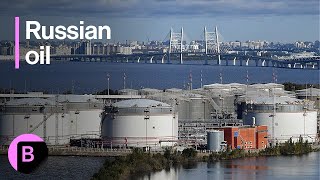
India rupee, in fact, hit another record low and it's also pressuring the Japanese yen here. India is heavily dependent on imported oil. When oil prices spike, India's import bill balloons, draining foreign exchange reserves and crushing the Rupee. A weaker currency combined with imported inflation will compress domestic corporate margins and trigger capital flight from Indian equity markets. SHORT. Emerging market oil importers are the primary collateral damage of a Middle East energy crisis, making broad Indian equities highly vulnerable. India successfully negotiates massive discounts on Russian crude (facilitated by the new US waivers), entirely insulating its domestic economy from the global Brent price spike.
Qatar actually accounts for about one third of global helium. So that shortage is really affecting chip makers because it's an essential element for chip making. Semiconductors require highly specialized noble gases for manufacturing. A prolonged blockade in the Middle East chokes off a third of the world's helium supply, which will force chip foundries to halt production or pay exorbitant prices for raw materials, crushing their margins and delaying global tech hardware deliveries. SHORT. The semiconductor sector is highly vulnerable to this specific commodity shock, and the market is only just beginning to price in the supply chain contagion. Foundries may have larger-than-expected strategic stockpiles of helium, or alternative suppliers (like the US or Algeria) rapidly scale up production to fill the Qatari gap.
Clearly a bond market is sniffing stagflation here. We have seen less than one rate cut priced into the bond market as things stand. The energy shock is driving up short-term inflation expectations, forcing the Federal Reserve to abandon its easing cycle. Higher-for-longer interest rates in a low-growth environment will continue to drive up long-end yields, which inversely destroys the capital value of long-duration Treasury bonds. SHORT. Stagflation is the worst possible macroeconomic environment for long-duration fixed income. The energy shock causes such a severe global recession that the Fed is forced to cut rates dramatically to save the economy, which would cause long-duration bonds to rally.
We've probably got a shortfall of something from 13 to 15 million barrels a day of what's no longer coming out of the Persian Gulf. And that release by the countries in the IEA is going to bring maybe 2 million barrels a day. The market is facing a massive, structural supply deficit that cannot be plugged by emergency government reserves. As the Strait of Hormuz remains closed, sustained triple-digit oil prices will drive massive free cash flow generation for Western oil majors and broad energy sector ETFs. LONG. The physical oil market is fundamentally broken on the supply side, guaranteeing elevated prices and margin expansion for unhedged energy producers outside the conflict zone. A sudden diplomatic breakthrough or regime change in Iran that immediately reopens the Strait of Hormuz, causing a rapid collapse in the geopolitical risk premium.
If they're going to Europe, they're having to avoid about 4 hours of airspace... And you have the surging fuel prices. Airlines operate on razor-thin margins. The simultaneous combination of spiking jet fuel costs and massive operational inefficiencies (flying 4 extra hours requires more fuel, reduces aircraft utilization, and increases crew costs) will obliterate profitability for international carriers. SHORT. The aviation industry cannot pass 100% of these extreme cost increases onto consumers without destroying demand, leading to inevitable earnings misses. Governments could step in with fuel subsidies for national carriers, or airlines successfully pass all costs to consumers without a drop in booking volumes.
This Bloomberg Markets video, published March 13, 2026,
features Winnie Hsu, Amol Shitole, Anthony DiPaola, Leen Al Saady
discussing EPI, INDA, SMH, ASML, TSM, TLT, CVX, XLE, USO, JETS, DAL, UAL.
5 trade ideas extracted by AI with direction and confidence scoring.
Speakers:
Winnie Hsu,
Amol Shitole,
Anthony DiPaola,
Leen Al Saady
· Tickers:
EPI,
INDA,
SMH,
ASML,
TSM,
TLT,
CVX,
XLE,
USO,
JETS,
DAL,
UAL