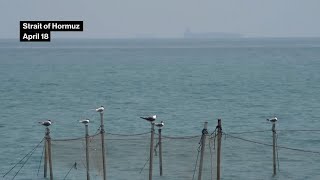
Iran Claims ‘Strict Control’ of Strait of Hormuz
Speakers
Summary
Guests Andrew Peek and Jennifer Gavito analyze the dueling messaging between Iran and the U.S. regarding the Strait of Hormuz and potential nuclear talks. They discuss Iran's exercise of control over the strait as a new, disruptive tool that poses a long-term risk to global energy commerce. The conversation covers the geopolitical weakening of Iran's proxies and the complex, fluid negotiations being mediated by Pakistan.
- Iran reimposed restrictions on vessel traffic through the Strait of Hormuz, demonstrating a disruptive capability.
- The U.S. and Iran are engaged in conflicting public messaging ahead of expected renewed talks.
- Iran's geopolitical position has weakened since 2018 with setbacks for allies like Assad, Hezbollah, and Hamas.
- The ability to close the strait is seen as a lasting risk to global commerce, especially for Gulf energy exporters.
- Pakistan is acting as a mediator in the talks, benefiting from increased U.S. goodwill.
- Negotiations are complicated by internal Iranian divisions and the absence of a clear supreme leader.
- The principle 'nothing is agreed until everything is agreed' underscores the fluidity of the situation.
- The conflict in Lebanon remains an important factor in the broader geopolitical calculus.