2026 Investment Strategy: Earnings Momentum Has the Answer! | Jeong Hee-seok, Vincent
Summary
Jeong Hee-seok, a private banker at Hana Securities Centerfield W, joined Vincent to outline his 2026 investment strategy. He argues that investors should concentrate on companies with above-consensus revenue growth and simultaneous margin improvement, where AI tech and memory are the strongest themes. He details coming shortages in memory, AI PCB, optical components, and power semiconductors, and explains Nvidia's 800V DC data-center transition and its impact on SiC/GaN and ESS. He remains positive on Korean tech/memory, Alphabet, and AI infrastructure, while cautioning against premature diversification into lagging sectors.
- The 2026 strategy centers on earnings momentum: revenue growth above consensus plus improving profitability.
- AI service traffic growth is the key demand driver, making memory semiconductors the most sensitive AI component and a core allocation.
- The speaker sees likely 2026 shortages in memory, AI PCB, optical components, and power semiconductors, with China exclusion favoring U.S./Korean suppliers.
- Nvidia's 800V DC data-center power architecture is expected from 2027, requiring SiC/GaN power semis and shifting UPS to ESS.
- Korean market strength is expected to remain memory/tech-led, and the speaker remains positive on Alphabet's AI position.
- He prefers staying concentrated in tech/AI over diversifying into batteries or biotech for now.
Ideas
Up Next
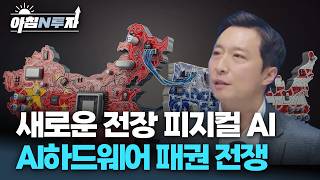


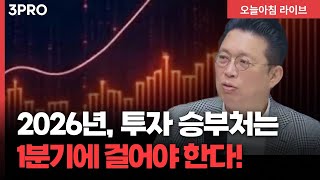
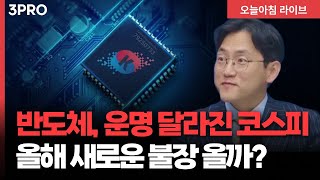
This 3PRO TV (삼프로TV) video, published January 02, 2026, features Jeong Hee-seok discussing XLK, AI value chain, SMH, 000660.KS, 005930.KS, MU, EWY, AI optical components, GOOGL, AI PCB, Korean PCB suppliers, U.S. PCB suppliers, Power semiconductors, SiC/GaN, AI-SECTOR, 800V DC power infrastructure, ESS, AI data center ESS. 9 trade ideas extracted by AI with direction and confidence scoring.
Speakers: Jeong Hee-seok · Tickers: XLK, AI value chain, SMH, 000660.KS, 005930.KS, MU, EWY, AI optical components, GOOGL, AI PCB, Korean PCB suppliers, U.S. PCB suppliers, Power semiconductors, SiC/GaN, AI-SECTOR, 800V DC power infrastructure, ESS, AI data center ESS