U.S., Is Trump's Goal Not Drugs but Oil Resources? How Will the U.S. Handle Venezuela's Chaos | Min Won-jeong, Seoul National University Asia Center
Summary
Min Won-jeong analyzes the U.S. operation that captured Nicolas Maduro and places it in the longer history of the Monroe Doctrine and U.S. intervention in Latin America. She argues that the drug rationale is secondary and that oil resources, along with limiting Chinese influence, are central U.S. motives. The discussion covers Venezuela's degraded oil infrastructure, fragmented domestic power, regional divisions, and the high uncertainty of any political transition.
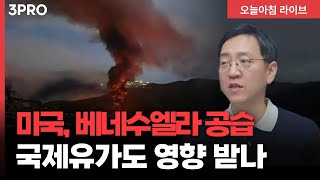
- U.S. forces captured Nicolas Maduro, shocking Venezuela and international observers.
- The guest frames the event as a modern continuation of the Monroe Doctrine and two centuries of U.S. intervention in Latin America.
- She argues oil and resource control, not drug enforcement, are the core U.S. motives.
- Venezuela has large oil reserves and heavy crude useful to U.S. refineries, but its oil facilities are outdated and would take at least ten years to rebuild.
- Domestic power is fragmented among military and militia factions, raising the risk of prolonged chaos.
- Latin American governments are divided along left-right lines, and many quietly worry about U.S. intervention.
- China's deep trade and investment ties in Latin America limit how much the U.S. can roll back its influence.
- The post-Maduro transition remains highly uncertain, with no clear successor favored by Washington.
Ideas
Up Next


This 3PRO TV (삼프로TV) video, published January 05, 2026, features Min Won-jeong discussing WTI. 1 trade idea extracted by AI with direction and confidence scoring.
Speakers: Min Won-jeong · Tickers: WTI