Ideas
MongoDB is down ~27% on a weak earnings forecast. The speaker notes, "Software companies are just not doing well this year." High-growth software is a long-duration asset. As inflation fears rise (due to oil shocks) and Treasury yields spike, the discount rate for future cash flows increases, crushing valuations for unprofitable or high-multiple software names. AVOID. The macro environment (rising rates + risk-off) is hostile to this sector. Oversold bounce if yields stabilize.
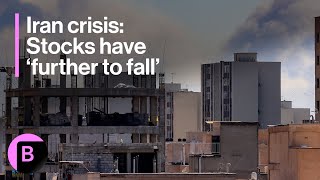
Qatar has halted its LNG export plant (20% of global supply). European gas futures are up 30-38%. The Strait of Hormuz is effectively closed. The world has lost a massive chunk of natural gas supply overnight. Europe and Asia must scramble for alternatives. The US is a net exporter and geographically isolated from the conflict, making US gas (UNG) and exporters (Cheniere - LNG) the primary beneficiaries of the supply vacuum. LONG. This is a structural supply shock that cannot be fixed quickly. US government could restrict exports to keep domestic prices low; warm weather could dampen demand.
Treasuries are extending losses (yields up) due to "inflation fears roiling the markets." An oil shock creates cost-push inflation. Central banks cannot cut rates into rising inflation, even if growth slows. This forces yields higher, causing bond prices (TLT) to fall. SHORT. The "flight to safety" into bonds is broken because inflation is the root cause of the crisis. A sudden deflationary crash or recession could trigger a pivot back to bonds.
The Trump administration is considering capping H200 chip sales to Chinese companies at 75,000 units per entity. The stock is down >3% pre-market. This policy introduces a hard ceiling on revenue from a key growth market (China). Combined with general risk-off sentiment and supply chain shocks from the Middle East, the premium valuation faces immediate compression. SHORT. Regulatory headwinds are tangible and immediate, removing a portion of the TAM (Total Addressable Market). The caps might be less severe than rumored, or US defense spending (OpenAI/DoD deals) could offset commercial losses.
Blackstone is allowing investors to redeem a record 7.9% of shares ($3.8B) from its flagship private credit fund amid anxiety over the asset class. High redemption requests signal investor fear regarding liquidity and the underlying health of private credit portfolios (specifically exposure to software businesses, which are struggling). If redemptions persist, it forces asset sales or gates, damaging confidence. WATCH. This is a canary in the coal mine for the private credit bubble. Blackstone has strong capital reserves and could manage the outflow smoothly.
The Yen and Swiss Franc are underperforming because they are major energy importers. Higher oil/gas prices act as a tax on the Japanese and Swiss economies, worsening their trade balances. Unlike the US, they do not have domestic supply to offset the cost. SHORT. These currencies are fundamentally vulnerable to energy inflation. Central bank intervention (BoJ) to prop up the currency.
Battalion Oil, a small-cap energy company, is up ~135% in pre-trade as Brent Crude pushes past $83/bbl. In a "war premium" environment where major transit routes (Strait of Hormuz) are closed, domestic US producers with secure logistics become prime assets. Small caps offer high beta leverage to the underlying commodity price. LONG. Pure play on the "fear premium" in oil prices. Extreme volatility; if de-escalation occurs, the premium will evaporate instantly.
The Dollar Index (DXY) is rising (>99) despite the Treasury sell-off. The US is now a net energy exporter. Historically, oil shocks hurt the US economy. Now, as a net exporter, the US is insulated. Conversely, Europe and Japan are net importers, meaning their currencies suffer from higher energy costs. The Dollar becomes the ultimate "stagflation hedge." LONG. The US is the "cleanest dirty shirt" in a global energy crisis. Fed intervention to weaken the dollar if it hurts exports too much.
This Bloomberg Markets video, published March 03, 2026,
features Abeer Abu Omar, Will Kennedy, Skyler Montgomery Koning, Vonnie Quinn
discussing MDB, UNG, LNG, TLT, NVDA, BX, FXF, FXY, BATL, UUP.
8 trade ideas extracted by AI with direction and confidence scoring.
Speakers:
Abeer Abu Omar,
Will Kennedy,
Skyler Montgomery Koning,
Vonnie Quinn
· Tickers:
MDB,
UNG,
LNG,
TLT,
NVDA,
BX,
FXF,
FXY,
BATL,
UUP