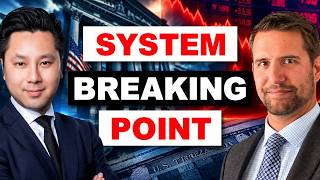
David Rosenberg: The Economy Is More Fragile Than You Think

Watch on YouTube ↗  |  August 20, 2026 at 20:00  |  26:27  |  Wealthion
Speakers
David Rosenberg — President, Rosenberg Research

Summary

David Rosenberg argues the U.S. economy is weaker than headline data suggests, with growth below potential and disinflation building. He expects the Fed's next move to be a rate cut and likes the front-end Treasury market while warning that long-end yields are driven by term premium and uncertainty. He also explains that strong S&P 500 earnings are narrowly driven by AI and energy, masking a bifurcated economy and fragile consumer income backdrop.

  • Rosenberg sees the U.S. economy growing below potential and building slack.
  • He expects disinflation to continue and the Fed's next move to be a cut, not a hike.
  • He favors front-end Treasuries, especially the two- and three-year notes.
  • He argues long-end Treasury yields are sticky due to term premium and policy uncertainty, not inflation expectations.
  • He notes S&P 500 earnings strength is concentrated in AI and energy, with ex-AI/ex-energy profits under 5%.
  • He warns consumer spending has been supported by a falling savings rate and stock market wealth effect.
  • He sees the economy and market as extremely bifurcated, with AI and war-driven energy outperforming the old economy.
Ideas
David Rosenberg President, Rosenberg Research 5:13
Front-end Treasuries benefit as Fed cuts.
The Fed's next move is likely a cut, not a hike, because the economy is growing below potential and inflation is cooling. The front end of the Treasury curve is still priced for at least one more hike; Rosenberg says those hike odds will come out, making the two-year and three-year notes very good places to be.
David Rosenberg President, Rosenberg Research 10:08
Long-end Treasuries face term premium pressure.
The rise in 10- and 30-year Treasury yields has been driven by term premium and uncertainty—fiscal, policy and inflation uncertainty—rather than by rising inflation expectations. That makes long-end bonds unattractive and sticky because risk premium may keep yields elevated even if inflation expectations keep falling.
David Rosenberg President, Rosenberg Research 14:30
S&P earnings strength is narrowly concentrated.
S&P 500 earnings strength is misleading because it is heavily driven by AI and energy; excluding AI and energy, corporate profits are running under 5% year-over-year. Corporate income share is at an all-time high and labor income share at an all-time low, leaving the market and economy extremely bifurcated and fragile.
David Rosenberg President, Rosenberg Research 18:22
War-driven energy earnings are skyrocketing.
Energy companies are earning outsized profits because of ongoing US-Iran tensions and uncertainty around the Strait of Hormuz. The conflict has made energy stocks a strong earnings pocket even as much of the rest of the economy is weak.
Up Next

This Wealthion video, published August 20, 2026, features David Rosenberg discussing Front-end US yield curve, US3Y, US2Y, 10-Year Treasury Note, 30-year Treasury bond, SPY, XLE. 4 trade ideas extracted by AI with direction and confidence scoring.

Speakers: David Rosenberg  · Tickers: Front-end US yield curve, US3Y, US2Y, 10-Year Treasury Note, 30-year Treasury bond, SPY, XLE