Hormuz Oil Shock Spreads West as Strait Remains Closed
Speakers
Eric Nuttall
— Senior Portfolio Manager at Nine Point
Summary
- Eric Nuttall describes the Strait of Hormuz closure as the worst energy crisis of our lifetimes, with the West yet to feel the full global impact.
- Forecasts a loss of ~900 million barrels in Middle Eastern production this year, comparable to the ~870-880 million barrel demand shock during COVID.
- Market complacency persists despite depleting safety buffers: unsanctioned Russian and Iranian barrels, and modest strategic petroleum reserve releases.
- Physical shortages of oil barrels are imminent, shifting focus from price to availability and bridging the paper and physical markets.
- If the strait remains closed, oil prices may need to reach ~$177 per barrel to induce demand destruction at 5.5% of global GDP spent on oil.
- A permanent political risk premium of $10-$20 per barrel is expected post-crisis due to Iran weaponizing energy and increased geopolitical risks.
- Global oil inventories are approaching multi-year lows, reversing pre-crisis expectations of a historic glut by 2026.
- OPEC spare capacity, largely behind the strait, is now vulnerable to disruption from low-cost threats like $30,000 drones.
- Production recovery faces delays: Kuwait requires 3-4 months to ramp up, and Iraq risks permanent reservoir damage to over 1 million barrels per day.
- The "new normal" implies sustained higher oil prices; long-dated reserves in politically secure regions (e.g., Canada) have become significantly more valuable.
Ideas
Speaker stated global oil production is down ~11 million barrels per day, with ~900 million barrels lost in Middle Eastern production this year, and if the Strait of Hormuz remains closed, oil prices may need to reach ~$177 per barrel to induce demand destruction. Safety buffers (e.g., unsanctioned Russian/Iranian barrels, SPR releases) are depleting in real time, leading to physical shortages. Even after the strait opens, a permanent political risk premium of $10-$20 per barrel is expected due to heightened geopolitical risks and potential permanent production damage in countries like Iraq and Kuwait. Oil prices are positioned for significant upside in the medium to long term due to sustained supply constraints, inventory draws, and increased risk pricing, warranting a LONG view. The Strait of Hormuz reopens sooner than expected, mitigating supply shocks, or demand destruction occurs at lower price levels than anticipated.
Up Next

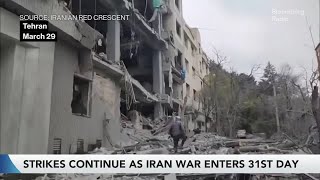



This Bloomberg Markets video, published March 30, 2026, features Eric Nuttall discussing WTI. 1 trade idea extracted by AI with direction and confidence scoring.
Speakers: Eric Nuttall · Tickers: WTI