Trump Does Not Want All Out War in Iran, Cook Says
Speakers
Steven Cook
— Senior Fellow, Council on Foreign Relations
Summary
Steven Cook argues the Iran-US standoff over the Strait of Hormuz may persist as a prolonged status quo, with periodic ship attacks and US Navy escorts, keeping energy transit risks elevated. Negotiations are hindered by mistrust, and military-economic pressure has not broken Iran’s regime.
- US strikes on Iran are viewed as warnings to protect shipping in the Strait of Hormuz.
- Deep mutual distrust makes a diplomatic breakthrough on the strait unlikely.
- The most realistic scenario is an extended US Navy escort operation with intermittent Iranian attacks.
- Economic pressure and military operations have not forced Iran to capitulate or change its approach.
- US munitions depletion raises concerns about reliance on expensive weapons in drone-age conflicts.
- Market participants are focused on the daily volume of tanker traffic safely traversing the strait.
Ideas
Prolonged Hormuz disruption risk persists
The standoff over the Strait of Hormuz is likely to settle into a prolonged status quo: the US Navy will continue escorting ships through a southern route while Iran periodically fires on vessels to assert control. This keeps disruption risk for energy resource flows elevated, with no comprehensive resolution in sight.
Up Next


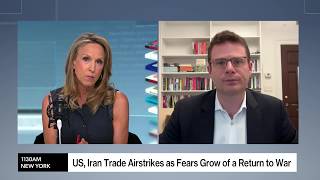
This Bloomberg Markets video, published July 10, 2026, features Steven Cook discussing WTI. 1 trade idea extracted by AI with direction and confidence scoring.
Speakers: Steven Cook · Tickers: WTI