US Debt Costs Climb; Farage Wins UK Special Election | Daybreak Europe 8/14/2026
Summary
The video covers US debt cost pressures after a weak 30-year auction, signs that the Fed may hold rates, and a tech-led AI rebound in Asia. It also reviews Japan's K-shaped economy, Trump's drone tariffs, Farage's UK by-election win, and fixed income views from Invesco's Alexandra Ivanova.
- US 30-year auction priced at the highest yield in a quarter century; 10-year yields also remain elevated.
- Ven Ram argues long-end Treasuries are selling off on term premium driven by deficits and uncontained inflation.
- OpenAI's annualized revenue run-rate tops $40bn, doubling from end-2025; DeepSeek also raises prices pre-IPO.
- Memory chip names SK hynix and Samsung rally after SanDisk's bullish signals, while Hong Kong internet names diverge.
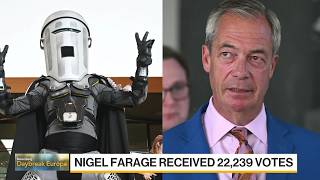
- Farage wins the UK special election with a large majority, but his finance investigation is likely to resume.
- Trump imposes up to 100% tariffs on foreign drones and components, deepening China supply-chain tensions.
- Japan shows a K-shaped economy: Nikkei strength and animal spirits contrast with pensioners squeezed by inflation and the weak yen.
- Alexandra Ivanova expects a Fed hold, curve steepening, front-end income, UK gilt support, and wider low-rated credit spreads.
Ideas
Up Next




This Bloomberg Markets video, published August 14, 2026, features Winnie Hsu, Sam Unsted, Ven Ram, Shery Ahn, Alexandra Ivanova, Lizzy discussing Meituan, KWEB, JD, 000660.KS, 005930.KS, TLT, N225, U.S. Treasury yield curve steepener, U.S. short-dated Treasuries, U.K. government bonds (gilts), Lower-rated corporate credit, FXY, Japanese Exporters, Japanese automobile exporters. 10 trade ideas extracted by AI with direction and confidence scoring.
Speakers: Winnie Hsu, Sam Unsted, Ven Ram, Shery Ahn, Alexandra Ivanova, Lizzy · Tickers: Meituan, KWEB, JD, 000660.KS, 005930.KS, TLT, N225, U.S. Treasury yield curve steepener, U.S. short-dated Treasuries, U.K. government bonds (gilts), Lower-rated corporate credit, FXY, Japanese Exporters, Japanese automobile exporters