Why Are Oil Prices Rising Faster Than Gas Prices?
Speakers
Interviewer
— Host
Guest
— Energy Analyst
Summary
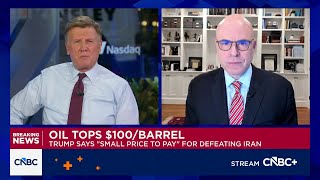
- Crude oil prices (WTI and Brent) have surged dramatically, jumping from the mid-$60s to over $100 per barrel.
- US gasoline prices have severely lagged this crude spike, only rising 15-16% (from the lower $3 range to mid $3 range) because suppliers have been delivering from existing storage.
- The Middle East has curtailed exports of refined products (roughly 2 million barrels a day), causing massive price spikes for jet fuel, diesel, and gasoline in Asian markets.
- The analyst predicts US pump prices will soon catch up to global product tightness, hitting $4 per gallon sooner than expected.
Ideas
"We're seeing a curtailment on the product side. We've seen the big curtailment out of The Middle East... having a dramatic impact on jet fuel prices in Asia, on gasoline prices in Asia, on Diesel." The Middle East is exporting less refined product, creating a global supply shock for diesel, jet fuel, and gasoline. This structural shortage drives up global "crack spreads" (the profit margin generated by refining crude oil into usable products). Large US refiners with complex facilities are perfectly positioned to step in, export to tight markets, and capture these historically high refining margins. LONG major US refiners who will benefit from structurally tight global refining capacity and surging international product prices. If crude oil prices rise faster than refiners can pass the costs onto consumers (crack spread compression), or if a global recession severely reduces commercial demand for diesel and jet fuel.
"The US is a laggard. And if we see what's happening in the rest of the world, it tells you that we're gonna see $4 at the pump more sooner than we otherwise see." Crude oil has nearly doubled (from $65 to $103), but US gasoline has only risen 15% due to domestic inventory drawdowns. As these local storage buffers deplete, US pump prices must mathematically catch up to the underlying cost of crude and the reality of tight global refined product markets. UGA (United States Gasoline Fund) directly tracks the price of gasoline futures, making it the purest play on this specific price catch-up. LONG US gasoline futures via ETF to capture the closing of the price gap between raw crude and refined pump prices. Government intervention (such as SPR releases or gas tax holidays) to artificially suppress pump prices, or sudden macroeconomic shocks that destroy consumer driving demand.
Up Next



This Bloomberg Markets video, published March 09, 2026, discussing VLO, MPC, PSX, UGA. 2 trade ideas extracted by AI with direction and confidence scoring.