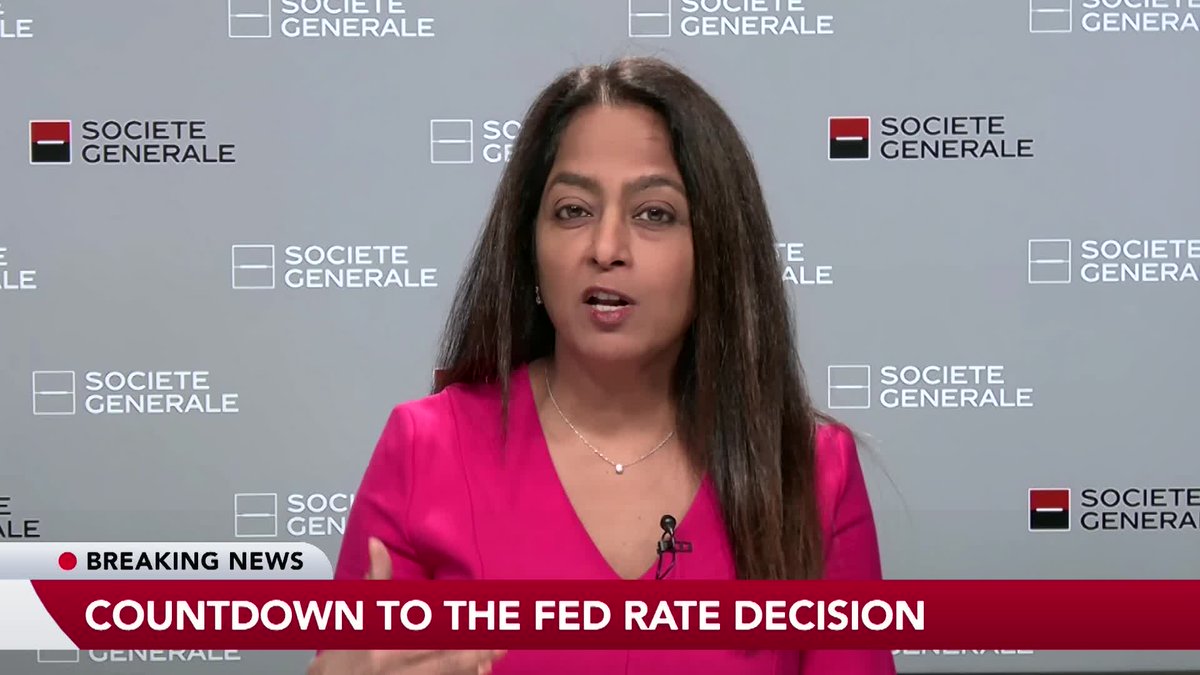
#477 Alpha Score 36.7

Subadra Rajappa

Head of Research at Societe Generale
· tracked since Mar 2026
477
BUZZBERG Alpha Score combines three things: realized average return, confidence in the sample size, idea volume, and speaker reputation. Speakers with only a few calls are pulled closer to the platform average; speakers with many evaluated ideas keep more of their own return. Reputation only boosts: 5.0 or lower is neutral, while scores above 5 add weight. Scores are normalized to 0-100; 100 is best. Read the FAQ
Alpha Score 36.7
Calls 7 4 Posts tracked · 0.1/day
Calls
7d 0
30d 0
90d 7
Best Calls
NKE short +19.4%
SBUX short +4.0%
Worst Calls
XLY short -4.3%
CVX long -4.0%
IEF long -1.8%
Most Mentioned
XOM ×1
CVX ×1
NKE ×1
Recent Calls
IEF long 2 months ago
COP long 2 months ago
CVX long 2 months ago
Win Rate 29% Long 4 Short 3
Win Rate
7d 86%
30d 57%
90d
Average Return +1.6% Long Return -2.0% Short Return +6.4%
Average Return
7d +2.3%
30d +2.9%
90d
Result
Result
Sort
Theme Stance
Ticker
Side
Mentions
Opened
Entry
P&L
Thesis
Theme
Source
Long
Mar 18
$95.75
-1.8%
Subadra Rajappa stated bonds are "still the place where you want to put your money to work," and that because the Fed is likely to stay on hold, investors will "flock to the belly of the curve." She explicitly concluded, "the belly is going to continue to outperform." A prolonged Fed hold anchors front-end yields, while rising risks to future growth (which could force more cuts later) increase the relative attractiveness of intermediate-term Treasuries (the belly). LONG the belly of the US Treasury curve (e.g., 5-10 year maturities) as demand is expected to concentrate there, leading to price outperformance relative to both shorter and longer maturities. The Fed surprises with a hike or growth proves resilient, reducing expectations for future cuts and causing the belly to underperform.
Macro
Long
Mar 12
$120.81
-1.5%
"We're an oil producer... the oil companies are going to benefit from higher oil prices." While high oil prices drag down the broader economy and consumer stocks (creating stagflation), domestic energy producers capture the direct upside of the commodity shock. They offer a natural portfolio hedge against the exact sticky inflation that is pressuring the rest of the market. LONG US energy majors to capitalize on surging oil prices and insulate portfolios from broader stagflationary drags. Geopolitical tensions ease leading to a sudden drop in crude oil prices, or a severe recession destroys global oil demand.
Energy
Long
Mar 12
$197.55
-4.0%
"We're an oil producer... the oil companies are going to benefit from higher oil prices." While high oil prices drag down the broader economy and consumer stocks (creating stagflation), domestic energy producers capture the direct upside of the commodity shock. They offer a natural portfolio hedge against the exact sticky inflation that is pressuring the rest of the market. LONG US energy majors to capitalize on surging oil prices and insulate portfolios from broader stagflationary drags. Geopolitical tensions ease leading to a sudden drop in crude oil prices, or a severe recession destroys global oil demand.
Energy
Short
Mar 12
$54.23
+19.4%
"The consumer is going to come under pressure because of higher oil prices. Disposable income is going to decline... we're at a point where the savings rate is very, very low." High oil prices act as a regressive tax. When combined with a cooling labor market and no savings buffer, consumers are forced to cut discretionary spending to afford basic necessities like gas and groceries. This directly compresses margins and revenues for non-essential retail, dining, and consumer discretionary sectors. SHORT consumer discretionary stocks as macro headwinds (stagflation, depleted savings) destroy their customers' purchasing power. Oil prices drop sharply, or wage growth unexpectedly accelerates, boosting consumer spending power and discretionary revenues.
Consumer
Short
Mar 12
$99.93
+4.0%
"The consumer is going to come under pressure because of higher oil prices. Disposable income is going to decline... we're at a point where the savings rate is very, very low." High oil prices act as a regressive tax. When combined with a cooling labor market and no savings buffer, consumers are forced to cut discretionary spending to afford basic necessities like gas and groceries. This directly compresses margins and revenues for non-essential retail, dining, and consumer discretionary sectors. SHORT consumer discretionary stocks as macro headwinds (stagflation, depleted savings) destroy their customers' purchasing power. Oil prices drop sharply, or wage growth unexpectedly accelerates, boosting consumer spending power and discretionary revenues.
Consumer
Short
Mar 12
$112.06
-4.3%
"The consumer is going to come under pressure because of higher oil prices. Disposable income is going to decline... we're at a point where the savings rate is very, very low." High oil prices act as a regressive tax. When combined with a cooling labor market and no savings buffer, consumers are forced to cut discretionary spending to afford basic necessities like gas and groceries. This directly compresses margins and revenues for non-essential retail, dining, and consumer discretionary sectors. SHORT consumer discretionary stocks as macro headwinds (stagflation, depleted savings) destroy their customers' purchasing power. Oil prices drop sharply, or wage growth unexpectedly accelerates, boosting consumer spending power and discretionary revenues.
Consumer
Long
Mar 12
$153.80
-0.8%
"We're an oil producer... the oil companies are going to benefit from higher oil prices." While high oil prices drag down the broader economy and consumer stocks (creating stagflation), domestic energy producers capture the direct upside of the commodity shock. They offer a natural portfolio hedge against the exact sticky inflation that is pressuring the rest of the market. LONG US energy majors to capitalize on surging oil prices and insulate portfolios from broader stagflationary drags. Geopolitical tensions ease leading to a sudden drop in crude oil prices, or a severe recession destroys global oil demand.
Energy
Showing 7 of 7 picks ยท sorted by mentions