What's Behind the Rare US-Japan Yen Intervention?
Summary
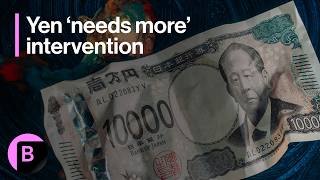
Bloomberg TV covers the first US-Japan joint yen intervention in 15 years. Macro strategist Andre de Silva explains that the IMF three-day accounting rule made a second round of intervention unsurprising and that Friday's action was around $53 billion. Despite the intervention, the macro backdrop of interest-rate differentials remains unfavorable for the yen, so policy is aimed at slowing depreciation rather than reversing it. He also notes that a sustained move lower in dollar-yen could pressure Japanese equities due to portfolio biases toward financials and exporters.
- First US-Japan joint yen intervention in 15 years took place, with approximately $53 billion deployed on Friday.
- A second round of intervention was expected under IMF three-day accounting rules to maintain free-floating status.
- Macro strategist Andre de Silva argues the rates differential continues to weigh on the yen, making the backdrop unfavorable.
- Policy strategy is seen as slowing the pace of yen depreciation, not turning it around directionally.
- If dollar-yen were to move significantly lower, it could put pressure on Japanese equities due to exporter and financial-sector biases.
- President Trump characterized the joint intervention as a signal of US-Japan friendship.
Ideas
Up Next




This Bloomberg Markets video, published August 03, 2026, features Andre de Silva discussing USD/JPY. 1 trade idea extracted by AI with direction and confidence scoring.
Speakers: Andre de Silva · Tickers: USD/JPY