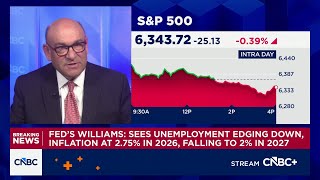
'Policy mistake' is off the table for the Fed: Neuberger Berman's Kantor on possibility of rate hike
Speakers
Charles Kantor
— Neuberger Berman Senior Portfolio Manager and Managing Director
Summary
- Charles Kantor believes the Fed has correctly avoided a "policy mistake" by recognizing current oil-driven inflation is supply-side and long-term inflation expectations remain anchored.
- He argues raising short-term rates into consumer headwinds from high gasoline prices is not sensible and would add "misery upon misery" for consumers.
- He firmly stands on the side of cutting rates if forced to choose, but recommends the Fed watch and wait, ready to cut only if the economy weakens significantly.
- Long-term, he is bullish on the U.S. economy due to underlying innovation, entrepreneurship, and a "tremendous earnings renaissance" with strong cash flows.
- Highlights the Magnificent Seven companies planning to spend almost $1 trillion on R&D and CAPEX in 2024, powering economic growth and creating future optionality.
- Notes the market trading at 20 times earnings may not be pricing in much optionality from innovation, suggesting potential undervaluation.
- Observes that during recent ~10% market drawdowns, traditional safe assets like bonds, gold, and Magnificent Seven stocks underperformed, while commodity prices rallied.
- Suggests a possible cause: oil-reliant states (e.g., Gulf States) facing revenue shortfalls may have sold the most liquid assets (gold, treasuries, Magnificent Seven stocks).
- Emphasizes short-term market direction is hard to predict, but long-term confidence is based on economic fundamentals and capital allocation by large companies.