Ideas
AI shift is early and huge.
Marc argues AI is the biggest technological revolution of his life—larger than the internet and comparable to the microprocessor, steam engine, and electricity—and that despite rapid adoption and unprecedented revenue growth among leading AI companies, products and capabilities are still extremely early. Falling costs of intelligence should drive elastic demand, so the industry likely has a long way to go rather than being topped out.
Enterprise AI has strong product-market fit.
On the enterprise side, the key question is what intelligence is worth. AI can directly improve customer service, upsells, churn, marketing, and products, and leading AI infrastructure companies are seeing tremendous pull and revenue growth, indicating strong product-market fit.
Nvidia's profit pool invites competition.
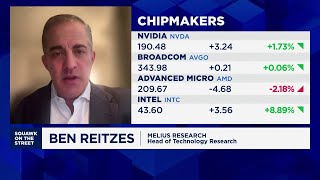
Nvidia is an exceptional company that earned its market position and profits, but the size of the AI chip profit pool is a giant signal for competitors. AMD, hyperscalers building custom chips, Chinese chipmakers, and startups are all targeting the market, and shortages historically become gluts; AI chips are likely to become cheap and plentiful within five years, which is positive for AI buyers but a medium-term competitive risk to Nvidia's pricing power.
Robotics is next global AI competition.
Andreessen frames AI in robotic form as the next global technological and economic competition. The robotics theme should grow as AI moves into physical systems, though the immediate competitive advantage lies with China.
Europe AI is overregulated and stalled.
The EU AI Act was draconian enough to kill much European AI development, and even large American companies like Apple and Meta are withholding leading-edge AI capabilities from Europe. Andreessen is very dark on Europe's AI/tech ecosystem, though he notes Mistral as an exception and some efforts to unwind the damage.
Cloud AI providers will grow much larger.
Big tech cloud providers were already in a cloud war, and they are now distributing their most advanced AI models through usage-based token sales. This gives startups low fixed costs and access to frontier intelligence, while cloud providers report massive, fast-growing revenue and attractive margins; Andreessen expects those businesses to get much larger.
China is a serious AI competitor.
China is a serious AI competitor: Chinese companies have caught up in software with open-source models like DeepSeek, Qwen, and Kimi, are working hard on domestic chips, and start ahead in robotics because much of the electromechanical supply chain sits in China. Andreessen says this should make investors more excited about China.
US AI outlook improves versus China.
Andreessen argues Chinese competition is putting pressure on the American system to avoid self-inflicted regulatory mistakes, and the policy landscape in DC has improved as leaders recognize this is a two-horse race. That makes him more bullish on the US.
AI drives energy and materials demand.
Andreessen notes that AI is a driver of demand in other American Dynamism sectors, especially energy and materials, as data centers and related infrastructure are built out. That creates a direct demand tailwind for those sectors.
AI transforms biotech and healthcare.
Andreessen expects AI to transform biotech and healthcare both on the healthcare delivery side and in drug discovery, and he says that transformation is already underway. This supports a long-term positive sector view.
This a16z video, published January 07, 2026,
features pmarca
discussing AI-SECTOR, Enterprise AI, AI infrastructure companies, NVDA, ROBO, VGK, MSFT, AMZN, GOOG, FXI, UST, XLB, XLE, XBI, XLV.
10 trade ideas extracted by AI with direction and confidence scoring.
Speakers:
pmarca
· Tickers:
AI-SECTOR,
Enterprise AI,
AI infrastructure companies,
NVDA,
ROBO,
VGK,
MSFT,
AMZN,
GOOG,
FXI,
UST,
XLB,
XLE,
XBI,
XLV