All Eyes on Warsh, Space Weapons, DreamMogged, Tomasz Tunguz Joins

Watch on YouTube ↗  |  September 16, 2026 at 20:31  |  2:24:41  |  TBPN
Speakers
Jeremy Allaire — CEO, Circle
Tomasz Tunguz — General Partner, Theory Ventures
William Leaden — Co-founder and CEO, Rune
Thomas Mueller — General Partner, Dragonfly Capital
Jordi Hays — Co-Host, TBPN
John Coogan — Co-Host, TBPN
Eli Walks — Founder and CEO, Footprint
Sean McCarthy — Co-founder and CEO, Back Ops
Justin Barose — Founder and CEO, Reno

Summary

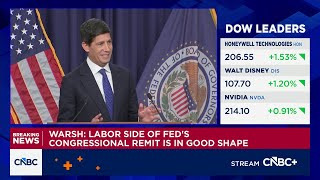
TBPN's September 16 show mixed AI regulation and safety debate, the Fed's first rate hike in three years under Kevin Warsh, and AI compute-market news with several startup and investor interviews. Circle's Jeremy Allaire discussed Arc, USDC, and stablecoin payment rails; Tomasz Tunguz outlined opportunities in inference, open-source models, software multiple arbitrage, and agent monetization. Rune pitched solar-powered modular AI data centers, while Impulse Space discussed orbital logistics and government space demand.

  • Fed hiked rates 25 bps for the first time in three years; dot plot pointed to more hikes.
  • AI trade and buildout were discussed as resilient despite higher rates.
  • US commerce reportedly pushed Kalshi to remove an AI compute price tracker, and the CFTC paused new compute contracts.
  • Circle launched Arc and positioned USDC and stablecoin rails for AI-agent and payment settlement use.
  • Tomasz Tunguz highlighted inference, open-source models, legacy software arbitrage, and agentic monetization.
  • Rune and Impulse Space pitched solar-powered AI data centers and in-space logistics.
  • Other guests covered financial-crime compliance AI, supply-chain AI, and turbulence simulation.
  • AI regulation, Meta Muse, and Persona Band product news were also discussed.
Ideas
Jordi Hays Co-Host, TBPN 17:02
AI buildout stays strong despite higher rates.
Despite the Fed's first rate hike in three years and a hawkish dot plot, the AI trade and buildout have remained overwhelming. The businesses and investing styles that depended on zero rates are the ones under pressure, while AI capex and investment demand are resilient.
Jeremy Allaire CEO, Circle 50:04
Stablecoin rails disrupt payments, boosting Circle.
Circle launched Arc, an AI-first economic operating system for stablecoin-based payments and contracts. USDC is positioned as the most trusted digital dollar, and the Genius Act makes stablecoins legal digital dollars in the US financial system from January 2027. Allaire argues programmable, instant, near-zero-cost blockchain settlement commoditizes payments and compresses rent extraction and processing fees, creating a large opening for Circle and for major retailers and global money-movers.
Tomasz Tunguz General Partner, Theory Ventures 72:58
Inference is software's biggest new market.
Voice AI requires different optimization from standard LLM use because response latency, KV-cache warming, time-zone load patterns, and conversion of phone calls into digital inputs matter. It likely starts in centralized data centers but will push to the edge as latency becomes critical.
Tomasz Tunguz General Partner, Theory Ventures 75:53
Chinese open-source models boost US neoclouds.
Chinese open-source models are capable and already used in production by large companies, but most are run on US inference neoclouds. Since open source is essential to the ecosystem, US inference neoclouds benefit from broader adoption of capable Chinese models.
Tomasz Tunguz General Partner, Theory Ventures 78:15
Long cheap legacy software, avoid pricey AI.
Fastest-growing AI harness/vertical AI companies are trading at 100-150x current ARR, an enormous multiple at scale, sometimes supported by low gross margins. By contrast, legacy software companies retain revenue extremely well and trade at low multiples, creating a multiple-arbitrage opportunity for holding companies such as Constellation Software and Danaher to buy them.
Tomasz Tunguz General Partner, Theory Ventures 82:39
Agentic data lifts Google and Meta ARPU.
Personal-agent companies need distribution first, then data trajectories, then monetization. Platforms with massive distribution such as Google and Meta can monetize new agentic data and targeting; if US Google ARPU of about $120 can double or triple, new targeting criteria can create very large companies.
William Leaden Co-founder and CEO, Rune 87:13
Unused solar powers modular AI data centers.
Utility-scale solar farms overbuild and waste more than 50 TWh per year in the US; excess solar is a feature of cheap renewable build. Rune's modular micro data centers can be deployed in about an hour on solar farms to convert otherwise unused solar into AI compute, and solar is far from saturated.
Thomas Mueller General Partner, Dragonfly Capital 130:18
Space logistics demand creates orbital infrastructure opportunity.
Demand for orbital transfer, precision maneuvering, and in-space logistics is rising. Impulse has a Space Force Victus Solo follow-on, is onboarding to NSSL as the only upper stage on the program, and sees the US government as the largest launch customer; space excitement and government demand support the sector.
Up Next

This TBPN video, published September 16, 2026, features Jordi Hays, Jeremy Allaire, Tomasz Tunguz, William Leaden, Thomas Mueller discussing AIQ, CRCL, USDC, Stablecoin payment rails, AI-SECTOR, US inference neoclouds, Legacy software, CSU.TO, DHR, GOOG, META, Solar-powered AI data centers, SOLAR, SPACE. 8 trade ideas extracted by AI with direction and confidence scoring.

Speakers: Jordi Hays, Jeremy Allaire, Tomasz Tunguz, William Leaden, Thomas Mueller  · Tickers: AIQ, CRCL, USDC, Stablecoin payment rails, AI-SECTOR, US inference neoclouds, Legacy software, CSU.TO, DHR, GOOG, META, Solar-powered AI data centers, SOLAR, SPACE