Ideas
Mega-cap tech leaders keep outperforming.
Julian argues concentration risk in the S&P 500 is not a reason to avoid the leaders: top 10 stocks are 40% of the index and comparable to Korea's two-stock concentration, so the math favors continued outperformance. The capital market cycle has not fully played out, and the beneficiaries are the same stocks that led into it; these companies have robust cash flow and a virtuous earnings cycle, and the AI adoption cycle should accelerate in 2026.
Long-dated bonds benefit from flat oil.
Julian expects Venezuela to be a long-term moderating influence on oil prices. If oil prices stay flat for longer, that is bullish for long-dated bonds, especially with a moderate jobs environment and lower inflation trajectory allowing the Fed to cut.
Long communication services and info tech.
Julian's explicit sector preference is communication services and information technology. Both sectors have large AI exposure, and in an algorithmic trading world, what is good for the consumer should flow through to AI names and boost the sector.
Diversify into Latin America on dollar top.
Julian thinks the rest of the world, including Latin America, is more interesting because he believes the dollar made a significant top a year ago. Over the long haul, that favors portfolio rebalancing away from the U.S. and diversification into non-U.S. assets, even if the AI theme keeps the U.S. attractive near term.
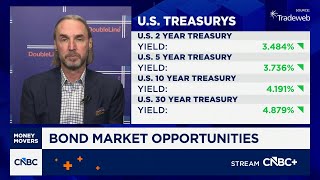
Expect further Treasury curve steepening.
Sonal says inflation risk is skewed to the upside from fiscal impulse and consumer demand, but she does not expect major inflation progress. She thinks the Fed should not have cut to 3.50% and that further cuts would be a mistake, so she expects a further steepening of the yield curve.
10-year gilts yields above 4.75%.
Sonal believes fixed markets can absorb yields up to 4.75% and above. With monetary and fiscal tailwinds and no recession in her baseline, she expects 10-year gilts to return above 4.75%, implying higher gilt yields and lower prices.
NVIDIA strong year, Rubin ramping.
Frank expects NVIDIA to have a strong year with over 100% capacity growth based on allocations. Much of that was expected, but Rubin is in full production and the autonomous-driving initiative is an exciting new direction, though earnings contribution is further out.
Memory chip prices keep rising.
Frank says memory recovery has been stronger than expected, with Samsung benefiting and Micron moving aggressively higher. Memory price hikes should continue in the first half of the year, and momentum remains strong behind memory.
Favor quality and value at reasonable price.
Emily is looking for quality companies with high return on equity that can produce outsized earnings growth at a reasonable price. She emphasizes value, quality, and value at a reasonable price as preferred style factors.
Industrials are favorite 2026 cyclical.
Emily says industrials are their favorite value sector and favorite cyclical into 2026. She expects some broadening in earnings trends and sees industrials as an area to outperform.
Health care offers defensive portfolio posture.
Emily identifies health care as a sector that can provide a more defensive posture within the portfolio while still offering opportunities as earnings broaden.
Don't bet against tech earnings.
Emily is not ready to bet against technology. She says tech still has the best earnings across companies globally right now, even as she expects some broadening out.
Rotate into Europe and non-U.S. equities.
Emily sees a massive rotation continuing into Europe. European stocks were up about 35% last year on just 3% earnings growth, and momentum is there while U.S. momentum stalls. A weaker dollar is a liquidity release valve that helps non-U.S. equities and riskier assets outperform, so she wants to hold non-U.S. assets, done in a higher-quality way.
Dollar weakness momentum continues.
Emily acknowledges textbook macro factors point to a stronger dollar, but the sell-everything-America trade has permeated currencies and momentum is with a weaker dollar. She does not expect another 10% decline this year, but she wants portfolio elements positioned for continuation of dollar weakness.
Defense spending trends higher.
Ed says defense spending is on an upward trend. Republicans have been comfortable increasing the defense budget, defense is at a post-WWII low as a percentage of GDP, the reconciliation bill added $150 billion, and a vote to increase defense spending is in the cards as Trump reasserts the Monroe Doctrine.
Fed cuts steepen yield curve.
Matt expects inflation to continue surprising to the downside, with productivity strength and decelerating unit labor costs pulling inflation back to 2%. He says the curve is still flat relative to the funds rate, and the Fed cuts he forecasts over the next couple meetings should continue to steepen the yield curve more than expected.
Market broadening trade has legs.
Liz Ann says the broadening-out trade should have legs in 2026. Mag-7 earnings growth is still higher but decelerating, and better or worse matters more than good or bad. Last year's strong S&P 500 masked bear-market-level drawdowns in the average member, creating opportunities outside the small concentration of mega-cap names.
International diversification adds benefits.
Liz Ann says international diversification makes sense. It worked last year, and while international may not consistently outperform, as a diversifier it adds benefits. She connects this to the weaker dollar and the end of the U.S.-only secular cycle.
Favor profitable small caps, avoid unprofitable.
Liz Ann says the rate-cut-driven bid down the cap spectrum into unprofitable small companies is a trade to fade. She wants to lean into the profitable piece of small caps instead.
Favor profitable small caps, avoid unprofitable.
Liz Ann says the rate-cut-driven bid down the cap spectrum into unprofitable small companies is a trade to fade. She wants to lean into the profitable piece of small caps instead.
Middle-market private equity is an oasis.
Troy says public equity valuations are stretched and it is difficult to find growth outside mega-cap tech. In that environment, middle-market private equity stands out as an oasis.
Data center debt and equity attractive.
Troy likes data center investments because forward demand is funded by hyperscalers with revenue and cash flow. He says senior data center debt offers an extra 50-70 basis points versus hospitality, and data center equity has more upside given where the real estate cycle sits.
AI hardware faces capex flatline risk.
Troy warns that if AI spending flatlines in 2027-28, broader markets can handle a multiple correction and hyper-scaler multiples can come down, but it would be very challenging, if not catastrophic, for hardware.
Robotic surgery and infusion care upside.
Troy is excited about robotic surgery and infusion care as sectors enjoying AI-driven growth. He says they may not be as juicy as AI has been, but they offer good upside.
This Bloomberg Markets video, published January 06, 2026,
features Julian Emanuel, Sonal Desai, Frank Lee, Emily Roland, Ed Mills, Matthew Hornbach, Liz Ann Sonders, Troy Gayeski
discussing XLK, TLT, XLC, ILF, Non-U.S. equities, U.S. Treasury yield curve steepener, 10-year gilts, NVDA, MU, 005930.KS, SMH, QUAL, Value Equities, XLI, XLV, VGK, UUP, ITA, SP:SPXEW, ACWX, Profitable small-cap equities, Unprofitable small-cap equities, Middle-market private equity, Data center senior debt, DTCR, AI Hardware, Robotic surgery, Infusion care.
24 trade ideas extracted by AI with direction and confidence scoring.
Speakers:
Julian Emanuel,
Sonal Desai,
Frank Lee,
Emily Roland,
Ed Mills,
Matthew Hornbach,
Liz Ann Sonders,
Troy Gayeski
· Tickers:
XLK,
TLT,
XLC,
ILF,
Non-U.S. equities,
U.S. Treasury yield curve steepener,
10-year gilts,
NVDA,
MU,
005930.KS,
SMH,
QUAL,
Value Equities,
XLI,
XLV,
VGK,
UUP,
ITA,
SP:SPXEW,
ACWX,
Profitable small-cap equities,
Unprofitable small-cap equities,
Middle-market private equity,
Data center senior debt,
DTCR,
AI Hardware,
Robotic surgery,
Infusion care