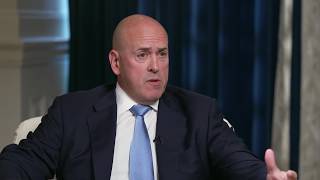
Patients Are Taking the Driver's Seat in Healthcare

Watch on YouTube ↗  |  September 15, 2026 at 13:22  |  8:51  |  Morgan Stanley
Speakers
Terence Flynn — Editor-in-Chief, Coindesk
Erin Price-Wright — Andreessen Horowitz General Partner

Summary

Morgan Stanley healthcare analysts Erin Wright and Terence Flynn discuss how patients are gaining more choice, transparency, and control in healthcare. Terence Flynn outlines a parallel direct-to-consumer pharma channel, especially for self-administered drugs with coverage gaps such as obesity/GLP-1s, and sizes the US DTC opportunity at about $26B. Erin Wright describes healthcare services consumerism, out-of-pocket spending, wearables/lab testing convergence, and argues diversified/vertically integrated managed care companies are best positioned to adapt.

  • Patients are gaining more control over access to care and medicine.
  • DTC pharma is expanding via telehealth and cash-pay channels for self-administered drugs.
  • Obesity/GLP-1s are the clearest proof point, with about half of employer coverage lacking obesity drug coverage.
  • Morgan Stanley sees a roughly $26B peak US DTC pharma opportunity.
  • AlphaWise data show meaningful out-of-pocket healthcare spending and willingness to pay.
  • Wearables and clinical labs are converging around subscription biomarker testing.
  • Diversified and vertically integrated managed care companies are viewed as best positioned.
  • The discussion highlights consumerism as a broad healthcare investment theme.
Ideas
Terence Flynn Editor-in-Chief, Coindesk 1:32
DTC pharma access channel is expanding
A parallel direct-to-consumer access channel is emerging in biopharma: patients can initiate treatment, obtain prescriptions digitally through telehealth, and fill through non-traditional cash-pay channels. This model is most viable for self-administered drugs with limited in-person infrastructure, lower price points or coverage gaps, and no REMS restrictions. Manufacturers already sell over 25 branded drugs this way, and Morgan Stanley estimates a $26B peak US DTC opportunity, about 3% of branded pharma spend, expanding as more self-administered products launch.
Terence Flynn Editor-in-Chief, Coindesk 2:05
Obesity/GLP-1 is clearest DTC proof point
Obesity/GLP-1 drugs are the clearest proof point that the DTC cash-pay model is viable. Only about half of the US employer coverage base covers obesity medications, so the other half faces a coverage gap and seeks alternative channels. This category drives roughly half of the $26B peak US DTC opportunity.
Erin Price-Wright Andreessen Horowitz General Partner 5:23
Patients gain control, healthcare consumerism grows
US healthcare consumers are becoming more proactive and preventative, driving a shift across the healthcare services ecosystem. Insurers are offering lifestyle savings accounts, providers are building digital front doors with 24/7 care, and direct-to-consumer pharmacies and price transparency are gaining traction. AlphaWise data show 25% of consumers paid entirely out of pocket for at least one service, with annual out-of-pocket spend around $98 and maximum willingness to spend about double, indicating demand for consumer-directed healthcare.
Erin Price-Wright Andreessen Horowitz General Partner 6:14
Out-of-pocket behavioral health demand grows
AlphaWise data show that 25% of consumers paid entirely out of pocket for at least one healthcare service, most commonly behavioral and mental health services at about 8% of the cohort. Annual spend was about $98, but maximum willingness to spend was about double that, suggesting consumers are willing to pay for these services.
Erin Price-Wright Andreessen Horowitz General Partner 6:39
Wearables plus labs enable actionable data
Wearable data is becoming more actionable as it aligns with biological data. Clinical laboratories are partnering with wearable companies and other direct-to-consumer healthcare platforms to offer subscription-based biomarker panels and other testing services, a convergence that empowers patients and supports greater consumer control of care.
Erin Price-Wright Andreessen Horowitz General Partner 7:19
Vertically integrated insurers best adapt to consumerism
Diversified and vertically integrated managed care companies are best positioned to adapt to healthcare consumerism because they have the most touch points with consumers and patients. Larger insurers are already increasing technology investments across insurance, provider, technology, and pharmacy assets to facilitate greater transparency and access.
Up Next

This Morgan Stanley video, published September 15, 2026, features Terence Flynn, Erin Price-Wright discussing Direct-to-consumer pharma, Telehealth providers, LLY, OZEM, Healthcare consumerism, Direct-to-consumer pharmacies, Behavioral and mental health services, Wearables, Direct-to-consumer healthcare platforms, IHF. 6 trade ideas extracted by AI with direction and confidence scoring.

Speakers: Terence Flynn, Erin Price-Wright  · Tickers: Direct-to-consumer pharma, Telehealth providers, LLY, OZEM, Healthcare consumerism, Direct-to-consumer pharmacies, Behavioral and mental health services, Wearables, Direct-to-consumer healthcare platforms, IHF