Dollar weakness was a major catalyst for global stocks, says BFG Wealth's Peter Boockvar
Speakers
Peter Boockvar
— Chief Investment Officer, BFG Wealth Partners
Brian
— CNBC Host (Inferred context)
Female Host
— Host
Summary
- The US market cap reached an extreme 60% of the global total despite only representing 25% of global GDP, signaling a necessary pendulum swing toward international markets.
- Dollar weakness has been a primary catalyst (driving ~1/3 of returns) for the outperformance of global stocks over US stocks.
- Deep value plays in regions previously deemed "uninvestable" (like Germany and China) are outperforming simply because valuations became too cheap to ignore.
- The "Mag-7" trade is sputtering as companies fight for AI dominance, while investors shift focus to the non-tech companies that will actually adopt and use these technologies to improve efficiency.
Ideas
The dollar saw its worst performance since the early 70s in the first half of the previous year. The US economy is over-indexed in global markets (60% market cap vs 25% GDP). As capital flows out of the US to chase cheaper valuations abroad, selling pressure on the dollar continues. Foreigners are hedging dollar exposure at rates not seen before. A global crisis usually triggers a "flight to safety" into the US Dollar.
The trade is "sputtering out." While stocks like Google are up, the group is no longer moving in unison as a guaranteed win. The intense competition for AI dominance is expensive and taking a toll on these companies. Furthermore, foreign investors are increasingly hedging their dollar exposure when buying these stocks, signaling caution on the currency side. The Mag-7 became a "global reserve asset," leading to overcrowding, but momentum is fading as investors look for cheaper alternatives globally. Continued AI breakthroughs could reignite momentum in the sector.
Peter Boockvar
Chief Investment Officer, BFG Wealth Partners
The US market became historically expensive relative to its GDP contribution. Investors are now realizing "seven stocks are not all of our choices" and are diversifying into the other 96% of the world's population. A weaker US Dollar makes international assets instantly more valuable in dollar terms. Additionally, trade wars and reduced reliance on the US have forced these countries to deregulate, cut red tape, and form their own trade relationships, improving their internal fundamentals. Korea doubled in a year driven by memory chips; roughly one-third of international returns were driven purely by currency translation (weaker dollar). A sudden resurgence in US Dollar strength would dampen returns for US-based investors.
Up Next
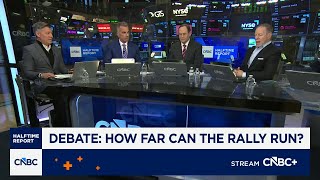




This CNBC video, published February 09, 2026, features Peter Boockvar discussing USD, FNGS, EFA. 3 trade ideas extracted by AI with direction and confidence scoring.
Speakers: Peter Boockvar · Tickers: USD, FNGS, EFA