Even if the US raises interest rates, will Korean stocks hold up? The reason is...
Summary
Dr. Kim Hyo-jin from Shinyoung Securities discusses why Korean stocks can hold up even if the US tightens monetary policy. A ceasefire-related oil price drop eases inflation fears, and under new Fed Chair Warsh the focus will be on a very gradual balance sheet reduction rather than aggressive rate hikes. Most importantly, Korea's deeply embedded role in the AI supply chain and its cheap stock valuations have reduced its sensitivity to US interest rate moves.
- Oil fell to $70 WTI after ceasefire news, easing US inflation fears and reducing pressure on the FOMC to be hawkish.
- Midterm election fiscal uncertainty diminished, removing a risk that had overhung markets.
- New Fed Chair Warsh favors shrinking the Fed's bloated balance sheet instead of raising rates, creating a hawkish-dovish mix that confuses markets.
- The balance sheet reduction is expected to be extremely slow (like paint drying), limiting the shock to long-term U.S. interest rates.
- Korean stocks have become much less cyclically sensitive because Korea now acts as an AI supply-chain bottleneck, providing structural growth.
- With Korean equities trading at cheap valuations, the direct hit from balance sheet reduction or rate hikes is likely to be significantly muted.
- The host briefly mentions a leveraged space ETF (SPX) as a risky but available investment vehicle.
Ideas
Up Next

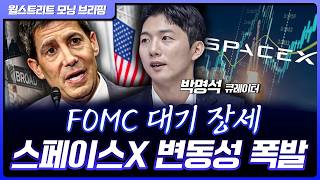
This 3PRO TV (삼프로TV) video, published June 16, 2026, features Kim Hyojin discussing EWY. 1 trade idea extracted by AI with direction and confidence scoring.
Speakers: Kim Hyojin · Tickers: EWY