Ideas
AI power demand drives electricity growth
AI and data centers require massive, continuous 24/7 electricity, and power demand is rising explosively in the US, China, and Korea. The speaker sees energy as the bottleneck of AI expansion, making power and utility infrastructure a structural long-term beneficiary.
Renewables needed despite high costs
Korea imports 93% of its energy, so expanding renewables improves energy security, supports climate goals, and helps exports facing carbon border tariffs. The speaker warns that overly expensive renewables can hurt industrial competitiveness, so scale and learning-curve cost reductions are essential.
Offshore wind attractive long term
Korea has favorable offshore wind resources and operating costs are low once built, but early-stage construction costs are high. The speaker argues scale and learning effects should lower costs, making offshore wind a promising long-term renewable option.
Coal should be avoided environmentally
Although power demand is rising, coal should be avoided because it is the most environmentally polluting generation source. The speaker prefers renewables, nuclear, and gas within a balanced energy portfolio.
Gas turbine supply is sold out
US gas plants are hard to build because gas turbines are effectively sold out for three to five years, and gas remains essential for fast backup and hybrid data-center power. The speaker sees gas turbine suppliers as beneficiaries of this tight equipment market.
Nuclear is needed for AI power
Nuclear is essential because AI data centers need 24/7 power and renewables alone cannot supply it; nuclear safety has improved and its cost is roughly half that of renewables or gas. The speaker says modern civilization cannot endure the current energy demand without nuclear.
SMRs power data centers continuously
SMRs can be co-located with data centers to provide continuous power and avoid the land and storage-cost problems of renewables. Big tech is interested, and Korea can play a major role in manufacturing, construction, and operation.
Korea nuclear exports have cost edge
Korea has rare Western-world nuclear construction capability at roughly half the cost and half the lead time of US or European competitors. US nuclear expansion targets, Saudi demand, and Southeast Asian projects create a large export opportunity for Korean nuclear equipment and construction firms.
Doosan Enerbility benefits AI power buildout
The speaker personally invested in Doosan Enerbility because it has exposure to nuclear, gas turbines, and offshore wind turbines, making it a broad beneficiary of AI power demand, nuclear exports, and power equipment shortages.
Korean power equipment enjoys export boom
Global demand for transformers, grid gear, and power equipment is tight because production capacity cannot easily expand. Korean suppliers are competitive on lead times and capacity, and the K-grid export strategy targets the profitable US market as China is increasingly excluded.
Hyosung Heavy benefits transformer shortage
The speaker personally invested in Hyosung Heavy Industries as a Korean transformer and power equipment supplier benefiting from tight global capacity for ultra-high-voltage transformers and Korea's favorable export position.
Hyundai E&C leveraged to nuclear construction
Hyundai E&C can benefit from K-nuclear and SMR construction, especially through its Westinghouse partnership. The speaker expects Korea to handle much of SMR manufacturing, construction, and operation while US firms focus on design.
ESS demand will grow rapidly
Data centers and renewables need storage to provide 24/7 power; storage currently doubles solar power cost, but ESS costs are falling rapidly. Korea's central contract auctions are creating a fast-growing ESS market and export track-record opportunities.
Battery makers gain from ESS growth
Korea's battery three companies are participating in large ESS central contract auctions. While EV demand is difficult, ESS is only 10-20% of battery demand but is growing rapidly, providing a new growth driver and US export credentials.
EV demand remains very difficult
The speaker warns that the electric vehicle side is very difficult and represents about 80% of battery makers' business, so investors should account for EV weakness even while expecting ESS growth.
US nuclear/SMR names benefit AI power
The speaker personally invested in US nuclear and power-related names GE Vernova, Oklo, and Centrus Energy as part of the AI-driven nuclear and SMR power buildout theme.
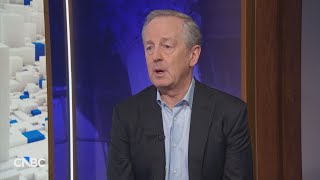
This 3PRO TV (삼프로TV) video, published January 14, 2026,
features Kim Hee-jip
discussing XLU, SOLAR, Offshore wind, Coal sector, XLI, URA, SMR, K-nuclear industry, 034020.KS, Korean Power Equipment, 298040.KS, 000720.KS, ESS, Korean battery makers (ESS exposure), KARS, GEV, OKLO, LEU.
16 trade ideas extracted by AI with direction and confidence scoring.
Speakers:
Kim Hee-jip
· Tickers:
XLU,
SOLAR,
Offshore wind,
Coal sector,
XLI,
URA,
SMR,
K-nuclear industry,
034020.KS,
Korean Power Equipment,
298040.KS,
000720.KS,
ESS,
Korean battery makers (ESS exposure),
KARS,
GEV,
OKLO,
LEU