Gold Price Crashing Again: 'It's Getting Worse' Warns Analyst, Here's What's Next | Jeff Christian
Speakers
David Lin
— Founder & Host, The David Lin Report / ex-Anchor, Kitco News
Jeff Christian
— Managing Partner, CPM Group
Summary
- Gold sold off sharply from its $5,600 January high to ~$4,500 despite the US-Israel war with Iran. The decline is attributed to four main factors: a hawkish Fed pivot (more important than the war), profit-taking by momentum investors, the physical market disruption from Dubai's closure, and a strong dollar as a competing safe haven.
- Long-term fundamentals for gold remain strong. Record U.S. fiscal deficits, persistent global political instability (especially U.S. domestic politics), and a secular increase in investment demand are cited as durable bullish drivers. The current price is still more than double the average all-in sustaining mining cost of ~$1,700/oz.
- The relationship between gold and economic conditions is inconsistent. Gold can perform well in the late stages of an economic expansion (as in 1979) and sometimes during recessions, but the correlation is poor. It is not a reliable recession hedge.
- The narrative for holding gold has evolved. Political risk has become a more prominent driver recently, surpassing pure inflation hedging or currency risk, which were more dominant in past decades.
- Silver is viewed favorably but is much more volatile than gold. A key bullish shift is that long-term holders who were sellers from 2022-2025 have largely stopped selling, tightening the physical market.
- On energy, higher oil prices have a dual effect: inflationary in themselves but disinflationary/recessionary for the rest of the economy by reducing discretionary spending. The analyst is more concerned about natural gas prices remaining elevated due to Middle East supply disruptions than about oil.
- The closure of the Dubai hub has severely disrupted physical gold flows for the Islamic world and India, creating artificial selling pressure and preventing normal physical buying, which is a significant near-term market distortion.
Ideas
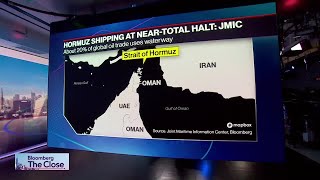
The speaker states he is "more concerned about natural gas prices staying higher" than oil prices due to the Middle East conflict, because a "greater portion of global LNG comes from Qatar and the Gulf region" through the disrupted Strait of Hormuz. The war has damaged energy infrastructure and closed key shipping routes. While oil has more diversified global production, LNG supply is more concentrated in the affected region, implying a longer and more severe disruption. WATCH because the supply disruption risk is structurally higher for natural gas/LNG than for oil, making its price trajectory a greater concern. A swift end to the hot war and rapid repair of LNG infrastructure could normalize supply faster than expected.
The speaker states long-term investment demand for gold is at record levels and is expected to stay high due to political instabilities globally and in the U.S., and that from a long-term basis, it "still makes sense." Despite a sharp ~20% correction driven by Fed policy and market disruptions, the core drivers (record deficits, political risk, secular investment demand) are intact or worsening. The price is still vastly above the ~$1,700/oz production cost. LONG because the fundamental long-term bull case is considered unchanged, with prices expected to consolidate and then move higher later in 2026 into 2027/2028. A sustained reopening of the Dubai physical market could alleviate a major source of recent selling pressure, but the broader political/economic thesis remains.
The speaker explicitly says "I like silver," noting the market is "relatively tight." A key change is that long-term investor selling, which was persistent from 2022-2025, has stopped as holders wait for potentially higher prices. The cessation of sales from a large cohort of holders (some dating back to the 2011 and 2021 peaks) reduces available supply. Combined with ongoing investment demand, this creates a tighter fundamental balance. LONG due to improved supply-side dynamics (reduced investor selling) within an already positive long-term precious metals environment, though it is acknowledged as more volatile than gold. A rapid shift in sentiment could cause these long-term holders to return as sellers to realize profits, increasing supply.
Up Next


This The David Lin Report video, published March 26, 2026, features Jeff Christian discussing UNG, GOLD, SILVER. 3 trade ideas extracted by AI with direction and confidence scoring.
Speakers: Jeff Christian · Tickers: UNG, GOLD, SILVER