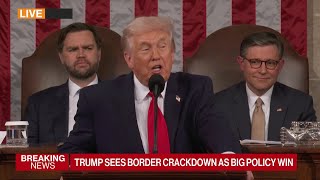
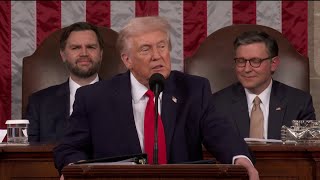
State of the Union: Trump Calls Supreme Court Tariff Ruling 'Very Unfortunate'
Speakers
Donald Trump
— President of the United States
Summary
- President Trump addresses a recent Supreme Court ruling striking down a specific tariff mechanism, labeling it "unfortunate" but asserting it will not stop his protectionist agenda.
- He claims tariffs will remain in place using "alternative legal statutes" that do not require Congressional action, ensuring continuity of trade barriers.
- The administration reiterates the goal of replacing the modern income tax system with revenue generated from tariffs.
- Trump predicts that foreign corporations will adhere to existing deals to avoid "far worse" new terms, driving capital and factory investment back into the US.
Ideas
Donald Trump
President of the United States
"Trillions and trillions of dollars will continue pouring in to the United States... replace the modern-day system of income tax." The rhetoric regarding replacing income tax with tariffs implies a fiscal environment highly favorable to domestic capital accumulation and consumer spending power (assuming tariffs don't spike inflation proportionately). The focus on "factories, jobs, investment" specifically favors US-centric companies. Small caps (IWM) are particularly sensitive to domestic economic strength and less exposed to foreign retaliation than mega-cap multinationals. LONG US Broad Equities, with a specific tilt toward domestic-focused indices. Inflationary pressure from tariffs eroding consumer purchasing power; failure to implement income tax cuts.
Donald Trump
President of the United States
"Tariffs... will remain in place under fully approved and tested alternative legal statutes... Congressional action will not be necessary." Despite the Supreme Court ruling, the administration is doubling down on protectionism. By utilizing alternative executive authorities to maintain tariffs, domestic steel producers and industrial manufacturers retain their pricing power and protection from cheaper foreign imports. The uncertainty of a "worse deal" for foreign competitors further solidifies the moat for US heavy industry. LONG US Steel, Nucor, and the Industrial Select Sector SPDR Fund as beneficiaries of continued protectionist policy. Legal challenges to the "alternative statutes" or retaliatory tariffs from trading partners hurting US exports.
Donald Trump
President of the United States
"Knowing that the legal power that I as President have to make a new deal, could be far worse for them... tariffs, paid for by foreign countries." The President is explicitly threatening foreign economies with punitive measures if they do not comply with current terms. This creates a hostile environment for exporters in China (FXI) and Europe (EZU/VGK), squeezing their margins and potentially restricting their access to the US consumer market. SHORT International Equities, specifically those with high export exposure to the US. Foreign governments successfully negotiating removal of tariffs or finding alternative markets for their goods.