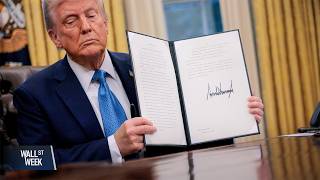
Mixed Signals on War Timeline After Trumps Ultimatum
Speakers
Ethan Bronner
— Bloomberg Israel Bureau Chief
Skylar Woodhouse
— Reporter, Bloomberg News
Summary
- Ethan Bronner analyzes conflicting messages on the Israel-Hamas war timeline, comparing the IDF head's statement that the war is at its "halfway point" to a general White House expectation of a "four to six week event."
- The central theme is President Trump's unpredictability and his dominant role in decision-making, with advisers providing mixed or muted messages that he often contradicts.
- Trump issued a strong "ultimatum" to reopen the Strait of Hormuz, which Skylar Woodhouse characterizes as a "pretty intense threat," marking a shift from prior talk of the war "winding down."
- Bronner highlights Trump's contradictory statements as evidence of his style, citing a reversal from saying "Israel must not" hit power plants to threatening action within "forty eight hours."
- Bronner's base case is that the war will not stop soon and likely has "three more weeks easily," based on the halfway point assessment and the expected White House timeline.
- Woodhouse notes the influence of outside advisers, including media mogul Rupert Murdoch, in urging Trump to proceed with the war, underscoring his role as the "deciding factor."
- A key uncertainty is whether Trump's advisers (e.g., JD Vance, Marco Rubio) can meaningfully influence his decisions, as he "likes to keep people guessing."
- The primary market implication is heightened geopolitical risk and unpredictability stemming from the U.S. administration's conflicting signals and the president's volatile rhetoric on a critical military and shipping corridor.