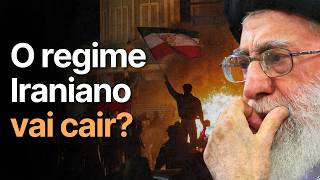
Trump Weighs Military Intervention in Iran… How Realistic Is a Large-Scale Airstrike? | Kim Deok-il, Research Fellow, Korea University Middle East and Islam Center
트럼프, 이란 군사개입 카드 만지작…대규모 공습 현실 가능성은? | 김덕일 고려대학교 중동, 이슬람센터 연구위원 [인뎁스60]
Speakers
Kim Deok-il
— Research Fellow, Middle East and Islam Center, Korea University
Summary
Kim Deok-il, a research fellow at Korea University's Middle East and Islam Center, discusses the Iranian anti-government protests that began in late December and escalated into a cross-class challenge to the Islamic Republic. He attributes the unrest to economic collapse, currency depreciation, sanctions, elite corruption, and resentment over spending on proxies. The regime has imposed a communications blackout and violent crackdown, while the U.S. weighs military options and Iran threatens retaliation. He concludes that the current regime has lost legitimacy and may face an existential battle, though the outcome remains uncertain.
- Protests began in late December from Grand Bazaar merchants over economic hardship and spread nationwide.
- Demands shifted from reform to overthrowing the Islamic Republic, with broad cross-class participation.
- Currency collapse and sanctions, including snapback measures, are key drivers of public anger.
- The regime cut internet and communications and deployed security forces; casualty estimates vary widely.
- U.S. options include nuclear-site strikes, leadership targeting, or cyber and electronic warfare; Iran threatens retaliation.
- China and Russia are seen as unlikely to intervene directly on Iran's behalf.
- The speaker says the regime has lost legitimacy and faces an existential battle, but no explicit investable recommendation is made.