Trump's Iran Deadline Looms; Tehran Rejects Proposal | Horizons Middle East & Africa 4/7/2026
Speakers
Joumanna Bercetche
— Anchor, Bloomberg
Mehvish Ayub
— Head of Managed Solutions, Bank of Singapore
Karen Young
— Senior Research Scholar, Columbia University
Neil Quilliam
— Associate Fellow, Middle East & North Africa Programme, Chatham House
Laura Davison
— Washington Bureau Chief, Bloomberg
Stuart Livingstone-Wallace
— Bloomberg Executive Editor for Middle East, North Africa, and Russia
Summary
- Geopolitical risk is centered on President Trump’s deadline for Iran to reopen the Strait of Hormuz, with threats to destroy Iranian civilian infrastructure (bridges, power plants) if terms aren’t met. Iran has rejected the proposal and threatened retaliatory attacks on Gulf energy sites.
- Markets show a discrepancy: betting markets (Polymarket) price only a ~27% chance of a ceasefire by April 30, indicating low expectations for a deal, while equity markets (Asia-Pacific, S&P futures) show relative complacency.
- Oil (Brent) is at ~$111/barrel, with significant upside risk; escalation could push prices to $140+ and trigger a shift from inflation to growth concerns.
- An inflationary impact is already being felt in the US via gasoline prices (>$4/gallon) and is expected to broaden into food, consumer goods, and housing via mortgage rates, influencing political pressure ahead of midterm elections.
- Portfolio strategy from Bank of Singapore emphasizes volatility management, diversification, and resilience. They shifted from overweight to neutral on Asia-Pacific ex-Japan equities in early March due to risk management, oil import dependency, and less attractive equity risk/reward.
- Gulf states (UAE, Saudi Arabia) are assessed as reluctant to engage militarily directly against Iran, preferring to sit out the conflict despite vulnerabilities, as they must "live with Iran" post-conflict.
- The U.S. dollar has benefited as a safe-haven currency from the conflict, but medium-term dynamics could shift due to interest rate differentials if the ECB/BoE hikes more aggressively in response to inflation.
- The war's cost is escalating for the U.S., estimated at $25B+ per week, with a potential Pentagon request for $200B in supplemental funding, drawing domestic political criticism.
Ideas
Explicitly stated her team took a decision in early March to move from overweight to neutral on Asia-Pacific ex-Japan equities. Cited three reasons: 1) risk management, 2) less attractive broad equity risk/reward, and 3) Asia's greater dependency on oil imports. In a volatile environment with high oil price risk due to the Iran conflict, Asia's economic and corporate profit growth is more vulnerable due to its status as a net oil importer. The specific, actionable allocation shift to neutral indicates a tactical view that the region's equities are unattractive or overly risky relative to other areas, advocating a reduction of exposure. A swift de-escalation and drop in oil prices would remove the primary headwind and improve the region's relative outlook.
Up Next


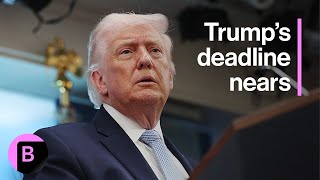


This Bloomberg Markets video, published April 07, 2026, features Mehvish Ayub discussing XLE. 1 trade idea extracted by AI with direction and confidence scoring.
Speakers: Mehvish Ayub · Tickers: XLE