Energy Sec. Wright on Venezuela oil deal: U.S. government will not be the operator of those reserves
Summary
Energy Secretary Chris Wright discussed the U.S.-Venezuela oil partnership from Caracas, emphasizing that the U.S. government will not operate reserves but will partner with private Venezuelan companies. He forecast significant Venezuelan production growth, downward pressure on global oil prices, and benefits for U.S. refiners built for Venezuelan crude. Wright also rejected the idea that global oil demand will peak soon.
- The U.S. deal is with a private Venezuelan company, not the Venezuelan government, and the U.S. government will not be the operator or producer.
- Venezuela holds 12-15% of global oil reserves but only just over 1% of global production, framing underproduction as an opportunity.
- Wright predicts Venezuelan output will rise from about 1.2 million barrels/day to over 1.5 million by H1 next year and over 2 million by decade-end.
- That supply growth is expected to put downward pressure on global oil prices.
- U.S. refineries built to run on heavy Venezuelan crude could benefit from discounted barrels.
- Wright dismissed peak oil demand forecasts as nonsense and expects lower prices to drive faster demand growth.
- Chevron is not part of this specific deal and has its own long-standing Venezuela position.
Ideas
Up Next

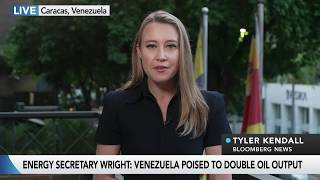


This CNBC video, published September 02, 2026, features Chris Wright discussing Venezuela, WTI, XLE. 3 trade ideas extracted by AI with direction and confidence scoring.
Speakers: Chris Wright · Tickers: Venezuela, WTI, XLE