The Secretive PE Firm Behind Burger King, Tim Hortons, Skechers and Hunter Douglas (3G Capital)
Speakers
Alex Behring
— Co-Managing Partner, 3G Capital
Daniel Schwartz
— Co-Managing Partner, 3G Capital
Summary
- 3G Capital employs a hyper-concentrated strategy: one major investment per fund, often holding for decades (e.g., RBI for 15+ years).
- They prioritize businesses that own the direct relationship with the consumer to avoid disintermediation by retailers (e.g., Amazon, Costco, Walmart).
- The firm admits a strategic error with Kraft Heinz (KHC), underestimating the power of private label (Kirkland) and the commoditization of packaged food.
- They view the current market as expensive with stretched valuations, making "great businesses" harder to find at fair prices.
- Operational efficiency (Zero-Based Budgeting) is secondary to revenue growth and franchise scalability in their modern playbook.
Ideas
Schwartz highlights the "share gain of private label" and explicitly praises Costco's "Kirkland" as a fantastic brand that disintermediates suppliers. This is the inverse of the KHC thesis. Retailers that own the customer relationship have immense pricing power and margin expansion opportunity by replacing branded goods with proprietary private labels. Long the disintermediators. As inflation presses consumers, the shift to private label (Kirkland/Great Value) accelerates, benefiting the retailers at the expense of the suppliers. Valuation concerns (COST is historically expensive); regulatory scrutiny on retailer pricing power.
3G remains the largest shareholder in Restaurant Brands International (Burger King, Tim Hortons, Popeyes). They highlight the franchise model's superiority: capital-light, royalty-based, and inflation-protected. The speakers emphasize that QSR brands "own the customer," unlike CPG brands sitting on a Walmart shelf. They cite massive international whitespace (e.g., taking Burger King France from 0 to €2B sales) and the hiring of Patrick Doyle (ex-Domino's) to drive tech modernization. A long-term compounder. The franchise model creates a moat against inflation (royalties on top-line revenue), and international expansion provides a long runway. Health trends shifting away from fast food; franchisee profitability struggles.
Alex Behring
Co-Managing Partner, 3G Capital
Behring admits the Kraft Heinz (KHC) merger struggled because they "underwrote the quality of the business" poorly. He explicitly states that commoditized packaged goods are losing share to private labels (specifically naming Costco's Kirkland). If a brand does not own the customer relationship, the retailer (Walmart/Costco) holds the power and will substitute with private label. This structural headwind applies to all legacy CPG companies with commoditized portfolios (General Mills, Conagra, etc.). Avoid legacy CPG. The "moat" of shelf space has eroded. 3G's pivot to SKX and QSR confirms they are fleeing this sector. A defensive rotation into consumer staples during a recession could temporarily boost these stocks.
Daniel Schwartz
Co-Managing Partner, 3G Capital
3G Capital recently invested in Skechers. Schwartz notes SKX is the 3rd largest sneaker company globally (behind Nike/Adidas), growing mid-to-high single digits, with $9B in sales vs Adidas' $14B. Unlike competitors reliant on "hero skews" (e.g., Jordans or Yeezys), SKX has a diversified product mix and high customer loyalty. Crucially, SKX owns its distribution (5,000+ stores/DTC), insulating it from the "retailer disintermediation" risk that plagued 3G's CPG investments. 3G's entry signals a conviction in SKX's undervaluation relative to its growth and a potential for operational improvements to close the gap with Adidas. Consumer spending slowdown; failure to maintain growth without a "hype" product.
Up Next


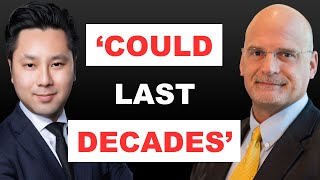
This ILTB Podcast video, published February 10, 2026, features Daniel Schwartz, Alex Behring discussing COST, WMT, QSR, KHC, CAG, GIS, SKX. 4 trade ideas extracted by AI with direction and confidence scoring.
Speakers: Daniel Schwartz, Alex Behring · Tickers: COST, WMT, QSR, KHC, CAG, GIS, SKX