Ideas
TSMC leads AI hardware earnings.
TSMC is a clear AI hardware winner: January revenue rose 36.8% year-over-year, its full-year growth target is above 30%, capex is being aggressively expanded, and order visibility from Nvidia and Apple supports continued strength. The AI buildout is not a bubble as long as TSMC's earnings power remains intact.
Micron drop is only profit-taking.
Micron's recent decline is not fundamentally driven but reflects profit-taking after a large run and rotation out of crowded AI winners. The HBM4 exclusion rumor is unconfirmed, so the long-term AI memory thesis remains intact.
Credo guidance raise is credible.
Credo Technology sharply raised its earnings guidance, which should be trusted as evidence of the changing AI infrastructure world; the stock stalled despite the upgrade, creating a positive setup.
Robotics and autonomy deserve renewed attention.
Autonomous driving and robotics momentum continues despite market volatility, with Waymo expanding testing and Mobileye winning a supplier role for Mahindra in India. The speaker says investors should look again at robotics and autonomous driving names.
Software faces AI-driven multiple compression.
AI agents threaten to insert a new layer above SaaS companies, reducing their pricing power and forcing multiple compression. Unless a software company has a strong technology moat, the sector is not attractive for bottom-fishing yet.
AI hardware remains the clear winner.
The clearest AI beneficiaries remain hardware—memory, foundry, and other physical AI supply-chain segments—because they cannot be easily replaced by AI software and are needed for years. Investors should favor visible hardware earnings over AI victims.
TSMC capex signals strong order confidence.
TSMC is not wasteful and is aggressively expanding capex, signaling confidence in orders from Nvidia and Apple. Its monthly results should remain strong, and it remains a core AI hardware winner.
Hyperscaler capex threatens high multiples.
Hyperscalers are in a debt-funded capex arms race that resembles a chicken game; buybacks are declining and free cash flow is shrinking. The high multiples may be hard to justify if investment keeps rising while EPS growth slows, so the group needs monitoring.
Google is best-positioned hyperscaler.
Among hyperscalers, Google is best positioned in the AI competition because of its assets and competitive position, even as the broader group faces capex and multiple concerns.
Equal-weight S&P 500 shows broadening.
The equal-weight S&P 500 ETF is hitting all-time highs while cap-weighted indices struggle, showing broad participation and a healthy rotation away from mega-cap concentration.
Real-economy transport cyclicals are strengthening.
Global manufacturing PMI is trending up on the lagged effect of central-bank easing, and FedEx—a global trade barometer—along with airlines and transport stocks are breaking multi-year highs. This supports a rotation into real-economy cyclicals.
Hyosung wins record US transformer contract.
Hyosung Heavy Industries won a record 780 billion won ultra-high-voltage transformer contract from a US transmission operator, with supply from 2028 to 2031. It is already the top US ultra-high-voltage transformer supplier with a Memphis plant, and margins are above 20% because tariffs are being passed to customers. The power equipment supercycle likely runs to 2030.
LS Cable wins high-margin US orders.
LS Cable & System won about 700 billion won in US high-voltage cable orders through 2029-2030, and margins are above 20% because tariffs are passed to customers. Capacity constraints mean domestic LS Cable plants also supply the US.
SK hynix leads HBM4 with 70% share.
SK hynix supplied HBM4 samples first and is using the cheaper 1b process, giving it better profitability while meeting Nvidia's specs. It is expected to take about 70% of HBM4 share, with volume ramping in the second half and HBM4 surpassing HBM3.
Samsung takes 30% of HBM4.
Samsung Electronics passed Nvidia's HBM4 qualification first, giving it around 30% share, though its 1c process may have higher costs. It remains part of the tight HBM4 oligopoly.
Micron lags HBM4 and may be excluded.
Micron is likely to be excluded from HBM4 for about 12 months because it lags target specs, especially pin speed. The stock has already fallen sharply on this concern.
Retail, aviation, logistics see rotation.
Money is rotating from semiconductors into financials, retail, logistics, and aviation. Department stores, hotels, and airlines are benefiting from Chinese New Year, record January passenger traffic, inbound tourism, Coupang-related disruption, and expectations of improving domestic consumption.
Korean financials lead on policy momentum.
Korean financial holdings such as KB, Shinhan, Hana, Woori, Korea Investment, and NH are the strongest sector, having avoided the recent correction. The commercial law revision and dividend/buyback momentum support their outperformance.
Korean memory earnings to surge.
The memory market is forecast to reach $550 billion in 2026, roughly double last year, and Korea's Samsung and SK hynix hold about 60% share. That implies roughly 500 trillion won of revenue and potentially 200-300 trillion won of operating profit, supporting upward GDP forecast revisions.
Small/mid-cap stock-picking era has begun.
The market has shifted from a large-cap-led rally to a stock-picking market where previously neglected small and mid caps are breaking out. Investors should focus on names with new issues and improving earnings rather than chasing the old leaders.
Daewoo E&C leads nuclear pivot.
Daewoo E&C took big bath provisions, cleaned up potential losses, and is pivoting toward nuclear power. Other builders may imitate its move, making it a new theme leader with a chart breakout.
Jeju Bank leads bank stablecoin theme.
Jeju Bank is rising on stablecoin-related news as banks are expected to lead stablecoin initiatives. It is seen as the most advanced bank in the stablecoin business, attracting investor interest.
3G Enter has new content catalysts.
3G Enter reported strong fourth-quarter earnings without the movie effect that boosted last year, and with a new season and a new movie in preparation, the stock could rise further.
Cardboard demand boosts Shin Dae Yang.
Shin Dae Yang Paper was neglected but is benefiting from rising cardboard prices, holiday delivery demand, and the shift in logistics from Coupang to Naver and large marts.
MLCC price hikes lift Samhwa Capacitor.
MLCC prices are expected to rise 20% in the first quarter, which should benefit low-end MLCC makers like Samhwa Capacitor, similar to how late-cycle memory price increases boosted Jeju Semiconductor.
Hanon Systems tied to autonomy theme.
Hanon Systems is supplying HVAC systems to an Amazon-backed autonomous driving company. As EVs require more energy-efficient thermal management, Hanon's global selection suggests it is being linked to the autonomous driving theme.
Biosimilar policy tailwind favors Celltrion.
Trump's drug-price pressure and PBM efforts to cut US drug costs favor cheaper biosimilars. Celltrion, a biosimilar maker with earnings growth through 2025-2027, has been depressed and is now attracting interest.
Doosan tracks Nvidia CCL demand.
Doosan is an AI-related company through its CCL supply to Nvidia's PCB substrate chain. If Nvidia infrastructure expectations rise, Doosan and Isu Petasys can extend gains, but the stock moves with Nvidia sentiment.
Hotel Shilla has inbound recovery setup.
Hotel Shilla is restructuring its duty-free business to reduce losses and strengthen hotels, while Chinese inbound tourism expectations could drive a rebound. The stock has pulled back and is worth watching.
Samsung pullback may offer entry.
Samsung Electronics' volume has dried up as buyers and sellers wait, suggesting no heavy selling. If it pulls back to the 20-day line or around 140,000 won, that could be an opportunity to accumulate again.
SK hynix faces exchangeable bond sales.
SK hynix has a 6.6 trillion won exchangeable bond overhang, about 1% of market cap. Holders who converted from 100,000 won levels have huge gains and are likely to sell, capping the stock near term.
AI world models threaten game moats.
Although NCSoft's user conference was well received in the short term, AI world models could reduce game developers' moats by making game creation easier. The long-term competitive advantage of game companies is at risk.
Cosmetics ODM names stay attractive.
Cosmetics remains attractive due to strong seasonality—buy in spring and sell after summer—and recent earnings are supportive. The ODM companies behind the brands, such as Cosmax, Korea Kolmar, and Cosmecca Korea, are especially well positioned.
Entertainment sector still worth buying.
Entertainment stocks have had a good week and remain attractive for purchase, supported by improving sentiment in the sector.
Solar demand is structurally changing.
Solar is a structural change, not just an Elon Musk theme: big tech needs solar power for AI data centers, energy security concerns favor non-Chinese supply, and China's removal of export tax rebates from April should raise Chinese prices, helping Korean solar makers.
Hanwha Solutions leads Korean solar.
Hanwha Solutions, through Q-CELLS, is the most representative Korean solar play and is developing perovskite for space and next-generation applications. It discussed progress on its earnings call, making it the preferred solar name.
Doosan Enerbility leads nuclear catalyst.
Doosan Enerbility is the representative nuclear stock, and its upcoming earnings could create positive momentum for the entire nuclear sector.
Hyundai E&C has long backlog catalysts.
Hyundai E&C has a large nuclear and power plant order backlog extending from 2026 to 2035, is involved in US solar projects in Texas, and could benefit if Trump pushes nuclear groundbreaking before the midterm elections. Recent weak earnings were expected, and the stock has room to rise.
Korea may peak later than US.
Korea may peak later than the US in 2025-2026, and investors should not sell just because the US market may be topping. Korea often benefits from the spillover after the US peaks, so watching the US market can guide timing.
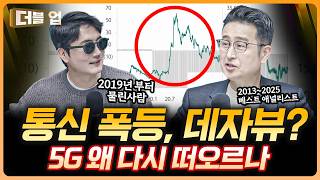
5G/6G capex cycle is restarting.
The telecom equipment sector is set up like 2019, with US and Korean frequency auctions and 5G standalone network investment needed before 6G. Traffic growth is resuming, carriers need to spend, and the same base station/relay equipment winners should benefit across 5G and 6G.
SeAH Mechatech pivots to ESS and robotics.
SeAH Mechatech started ESS module part sales to LG Energy Solution in August 2025 and expects meaningful 2026 ESS revenue in North America, with Europe preparations underway. Its high-vacuum die-casting and mechanism design technologies can be applied to advanced IT, EV, hydrogen, robot, and defense businesses, and it targets ROE of 9% with EPS growth and M&A optionality.
Park Ji-hoon
Director, Asset Management Consulting Dept., NH Investment & Securities
281:49
LG Energy Solution ESS turnaround ahead.
LG Energy Solution's North American ESS business is expanding rapidly, with cell lines being converted to ESS and double-digit sales growth. Consensus expects a sharp operating profit rebound in 2026 and roughly 3 trillion won in 2027, making it a key battery value-chain beneficiary.
Park Ji-hoon
Director, Asset Management Consulting Dept., NH Investment & Securities
282:41
LG Electronics has robot/HVAC re-rating.
LG Electronics is being re-rated on three drivers: its robot business, rapidly growing HVAC/air-conditioning orders for data centers, and shareholder-friendly policies. The stock had been range-bound and is now breaking out.
Park Ji-hoon
Director, Asset Management Consulting Dept., NH Investment & Securities
285:35
Battery sector is forming a bottom.
The Korean battery sector is bottoming as EV growth concerns are offset by ESS conversions, physical AI, solid-state battery progress, and policy tailwinds. Earnings expectations are low, and base effects could drive a re-rating.
This 3PRO TV (삼프로TV) video, published February 11, 2026,
features Park Myung-sung, Song Jaekyung, Kwon Soon-ho, Park Byeong-chang, Jang Woo-jin, Lee Seong-won, Kim Hong-sik, Lee Sung-wook, Park Ji-hoon
discussing TSM, MU, CRDO, BOTZ, MBLY, IGV, SMH, QQQ, MAGS, GOOGL, RSP, FDX, AIRLINES, IYT, 298040.KS, LS Cable & System, 000660.KS, 005930.KS, XRT, Hotels, Korean Air, 000120.KS, 105560.KS, 055550.KS, 086790.KS, 316140.KS, 071050.KS, 005940.KS, Korean small/mid caps, KOSDAQ, 047040.KS, 006220.KS, 419530.KQ, 006730.KQ, 001820.KS, 018880.KS, 068270.KS, 000150.KS, 007660.KS, 008770.KS, 036570.KS, 192820.KS, 161890.KS, 241710.KQ, Cosmetics ETF, Entertainment sector, TAN, 009830.KS, 034020.KS, 000720.KS, EWY, FIVG, 218410.KQ, 327260.KQ, LITE, SeAH Mechatech, 373220.KS, 066570.KS, KARS.
44 trade ideas extracted by AI with direction and confidence scoring.
Speakers:
Park Myung-sung,
Song Jaekyung,
Kwon Soon-ho,
Park Byeong-chang,
Jang Woo-jin,
Lee Seong-won,
Kim Hong-sik,
Lee Sung-wook,
Park Ji-hoon
· Tickers:
TSM,
MU,
CRDO,
BOTZ,
MBLY,
IGV,
SMH,
QQQ,
MAGS,
GOOGL,
RSP,
FDX,
AIRLINES,
IYT,
298040.KS,
LS Cable & System,
000660.KS,
005930.KS,
XRT,
Hotels,
Korean Air,
000120.KS,
105560.KS,
055550.KS,
086790.KS,
316140.KS,
071050.KS,
005940.KS,
Korean small/mid caps,
KOSDAQ,
047040.KS,
006220.KS,
419530.KQ,
006730.KQ,
001820.KS,
018880.KS,
068270.KS,
000150.KS,
007660.KS,
008770.KS,
036570.KS,
192820.KS,
161890.KS,
241710.KQ,
Cosmetics ETF,
Entertainment sector,
TAN,
009830.KS,
034020.KS,
000720.KS,
EWY,
FIVG,
218410.KQ,
327260.KQ,
LITE,
SeAH Mechatech,
373220.KS,
066570.KS,
KARS