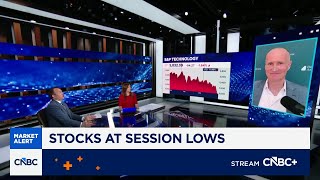
Uncertainty on war in Iran calls for Fed to keep rates steady, fmr. Dallas Fed Pres. Richard Fisher
Speakers
Richard Fisher
— Former Dallas Fed President
Summary
- Former Dallas Fed President Richard Fisher argues the Federal Reserve is in a "tough spot" and should pause, avoiding both rate hikes and cuts due to significant economic uncertainty.
- He attributes this uncertainty primarily to the "fog of war" stemming from geopolitical conflict, which he calls "an enemy of decision making."
- Fisher believes the Fed's dual mandate is in significant tension, with worries about inflation resurfacing just as the central bank thought it could focus more on the labor market.
- He states that market participants are "quite worried" and opines that the market is "a little bit over their skis" in pricing a ~24% probability of a rate hike, which he views as overstated.
- Fisher asserts the Fed must act as a "steady hand," allowing markets to be volatile while the central bank maintains stability and communicates its understanding of the uncertain environment.
- When presented with the argument that a surge in productivity could allow the Fed to run the economy hotter and cut rates, Fisher acknowledges productivity offsets cost increases but argues it is insufficient to counter current inflationary pressures from tariffs and input costs like oil and fertilizer.
- On the investigation into Fed ethics, Fisher says it has "opened a can of worms," creating an unfortunate delay for nominee Kevin Warsh and that the situation must be resolved for the confirmation process to proceed.