Ideas
Bullish S&P, targeting 7,500.
Mike expects a continuing market melt-up. He cites technical momentum, including the Nasdaq golden cross and the S&P 500 up 20% from lows, which historically led to 20%+ 12-month returns; fiscal stimulus and tax depreciation incentives; deregulation; expected Fed cuts of at least 150 bps and possibly 250 bps; overly low earnings estimates; AI infrastructure growth; and institutional positioning near five-year lows. He says tariff-related selloffs have been buying opportunities and targets S&P 500 at 7,500 in a year, with stocks up 10%-30% over 12 months.
Hold CoreWeave for multi-year AI growth.
CoreWeave is a pure-play AI cloud provider with scarce Nvidia GPU access, a solved cold-boot problem, and demand for AI tokens growing faster than infrastructure buildout for at least 5-10 years. Mike sees revenue reaching 12-15B next year, gross profit 7-8B, and a conservative market cap around 160B versus 70-80B now; the Core Scientific deal saves 10B in rent over the decade. He would hold it for multiple years for many multiples, despite volatility.
AI infrastructure demand outruns supply for years.
The market still underestimates AI infrastructure needs. Token growth, especially as LLMs move to agents, should outpace data-center, GPU, and grid availability for at least five years, giving hyperscalers and chipmakers pricing power and 20%-30% annual growth. He names Microsoft, Amazon, Broadcom, Nvidia, Marvell, AMD, Oracle, and CoreWeave as beneficiaries, with the largest AI infrastructure names also being major index weights that can drive the whole market.
Marvell and AMD should re-rate higher.
Marvell and AMD are growing with AI but trade around 15x next year's earnings; Mike argues they should trade closer to 30x as Wall Street realizes the scale of AI infrastructure. That multiple re-rating could cause a substantial pop before investors settle into normal earnings-growth ownership.
Crypto miners could pivot to AI hosting.
If crypto miners such as Marathon and Riot can obtain enough Nvidia GPUs and use their existing data-center infrastructure to host AI cloud computing, it would be a brilliant pivot as Bitcoin mining revenue eventually declines. This is a potential future path, not an active recommendation.
Google is easiest double despite overhangs.
Google is unbelievably cheap; despite search viability questions and a weak Gemini launch, its search data can help it build a leading AI competitor to xAI, ChatGPT, and Anthropic, and the market gives no credit for Waymo/self-driving. Mike sees Google as the easiest double over 12-24 months once overhangs clear, even though he expects Tesla to beat Waymo in self-driving.
Tesla wins self-driving on cost and data.
Tesla should beat Waymo in self-driving because its robotaxis cost about $25,000 versus roughly $250,000 for Waymo, and Tesla has far more driving data from cameras in its cars feeding its AI model.
Palantir dominates AI enterprise software despite valuation.
Palantir is expensive at 60x revenue, but Mike views it as the most consequential enterprise software ever, able to sit atop any system and implement AI agents and automation across an enterprise in weeks with no real competition. The AI software TAM could grow from $60B now to $1T by 2030; if Palantir keeps 8%-9% share and revenue reaches $70-80B, a 20x multiple implies $1.4-1.8T market cap despite massive multiple compression. Defense, war AI, and predictive analytics are additional demand drivers.
Gold target 5,000 as core hedge.
Mike is a huge gold bull with a $5,000 target. He owns gold as a core non-correlated asset and hedge that works regardless of the market outcome; a 10% allocation has drifted to 15%, so he is trimming back toward 10%, not because he is bearish.
Own Bitcoin as long-term satellite holding.
Mike is a Bitcoin bull and owns it as a satellite position for years, but he explicitly says it is not a diversifier because it is highly correlated with tech due to similar levered ownership.
Hold 32% XLC communication exposure.
He allocates 32% to XLC, making communication services his largest position; this is consistent with his broader mega-cap tech and AI overweight, though he gives no XLC-specific catalyst.
Overweight tech via XLK.
Mike is hugely overweight tech after being underweight last year, holding 30% in XLK, driven by the AI infrastructure and mega-cap tech growth thesis.
Own financials for curve steepening.
He owns financials via XLF because he expects the yield curve to steepen. Banks pay little on deposits and lend long; falling front-end rates, improving loan volume, a better economy, and less capital constraints, potentially unleashing $5T, should help. He sees the 2-year yield falling from about 3.8% toward 3.0%-2.5%.
Avoid oil; spikes met by supply.
Mike is not bullish oil or the energy complex. Any price spike, such as on Middle East headlines, will be met with massive supply, so spikes are selling opportunities; oil stocks may still make money but he cannot see them working well.
Lighten utilities after strong run.
Utilities have had a very strong run, and he would lighten up exposure.
Avoid healthcare on unfriendly regulation.
He is not bullish healthcare because RFK Jr.'s arrival likely brings unfriendly regulation toward these companies.
Avoid REITs; data centers are exception.
He is not bullish broadly on REITs or real estate even if rates fall; data centers are the exception.
Zero exposure to consumer staples.
He is underweight defensives and has zero ownership in consumer staples.
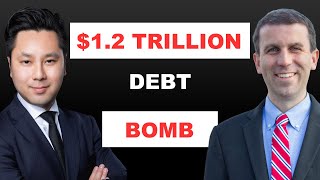
This The David Lin Report video, published July 09, 2025,
features Mike Lee
discussing SPY, CoreWeave, AVGO, NVDA, AMZN, MSFT, ORCL, AMD, MRVL, MARA, RIOT, GOOG, TSLA, PLTR, GLD, BTC, XLC, XLK, XLF, WTI, UTILITIES, XLV, XLRE, XLP.
18 trade ideas extracted by AI with direction and confidence scoring.
Speakers:
Mike Lee
· Tickers:
SPY,
CoreWeave,
AVGO,
NVDA,
AMZN,
MSFT,
ORCL,
AMD,
MRVL,
MARA,
RIOT,
GOOG,
TSLA,
PLTR,
GLD,
BTC,
XLC,
XLK,
XLF,
WTI,
UTILITIES,
XLV,
XLRE,
XLP