Why a US Torpedo Strike Sinking an Iranian Warship Puts India in a Bind
Summary
- The US executed a torpedo strike sinking an Iranian warship in the Indian Ocean, an escalation level not seen since World War II.
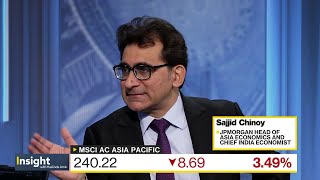
- The incident occurred near India's coastline while the Iranian ship was returning from a fleet review hosted by India, creating a diplomatic crisis for Prime Minister Modi.
- Modi faces a "tightrope" walk: balancing relations with the Trump administration (who previously tariffed India over Russian oil) against domestic anger and ties with Russia/Iran.
- The attack signals a significant expansion of the conflict zone, moving thousands of kilometers away from the traditional Middle East theater into major trade routes.
Ideas
The US conducted a torpedo strike on an Iranian warship, a kinetic action "not seen since World War Two." This marks a transition from proxy skirmishes to direct naval warfare involving heavy munitions. This validates the "supercycle" thesis for defense primes, specifically those involved in naval systems (General Dynamics) and precision munitions (RTX/Raytheon). The expansion of the conflict zone necessitates higher replenishment rates for US naval assets. Long defense primes as the conflict intensity and geographic scope widen. De-escalation treaties or budget constraints in the US defense sector.
The analyst emphasizes this is a "shock to the region" and an event that "hasn't happened since World War Two." "Unprecedented" military escalations are the textbook trigger for flight-to-safety trades. When naval warfare resumes after an 80-year hiatus, institutional capital rotates into non-sovereign stores of value to hedge against systemic geopolitical tail risks. Long Gold as a geopolitical hedge. A strong US Dollar (DXY) resulting from high US rates could cap Gold's upside.
The conflict has expanded to the Indian Ocean, and there are "concerns that the wider war might spread." An attack on an Iranian vessel by the US directly threatens the stability of global energy transit. While this specific attack was in the Indian Ocean, Iran's likely retaliation would target the Strait of Hormuz. Furthermore, the mention of previous tariffs on Russian oil highlights the fragility of global energy supply chains in this geopolitical environment. Long energy exposure via Spot Oil (USO) or Producers (XLE) as a hedge against supply chain disruption. Global demand destruction due to recession fears or increased US domestic production capping prices.
There is "domestic fallout" and "shock in India" because the ship was sunk after being hosted by India. Modi must walk a "tightrope" with the Trump administration. India is in a precarious diplomatic position. If Modi condemns the US to appease domestic anger, he risks economic retaliation (tariffs) from the Trump administration. If he stays silent, he risks domestic instability. This uncertainty creates an overhang on Indian equities until the diplomatic stance is clarified. Watch (Neutral) on India. Avoid aggressive longs until Modi's response is public and the US reaction is gauged. Modi successfully navigates the issue, leading to a relief rally, or the US ignores India's stance entirely.
Up Next



This Bloomberg Markets video, published March 05, 2026, discussing LMT, RTX, GD, GLD, XLE, USO, INDA. 4 trade ideas extracted by AI with direction and confidence scoring.